Eldoria · a party game for the TV
How to play
Hot Streak
On your turn you either flip another card or bank what you've got. Flip a number you're already holding and the whole pile is gone. Everybody watches every card land. First player past 200 wins.
The whole game in one picture
One card too many
That's the entire game. A hand is worth the sum of the numbers in it, and it's worth nothing at all the moment a number turns up twice. Nothing is banked until you say stop — so every card you flip is the whole pile riding on the next one.
Setting up
Getting everyone in
Open Hot Streak on the TV
Pick it off the party-games home screen and the TV shows a four-letter room code and a QR code.
Everyone joins from their phone
Scan, name, in. Turn order is join order and it never changes, so the person who joined after you is the person you'll be watching sweat.
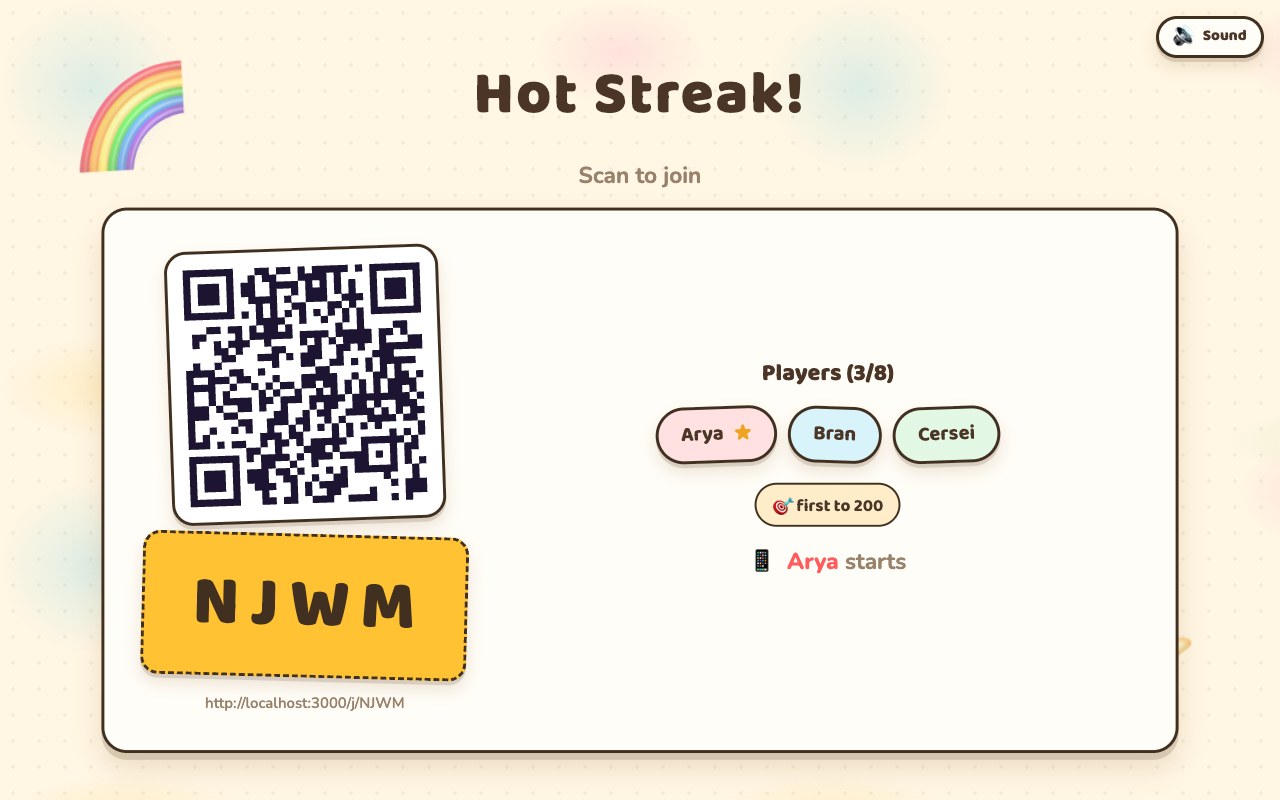
The host starts it
There's no length to pick here: Hot Streak is a race to 200, and it takes as many rounds as it takes — usually four or five. The host taps between rounds and that's the extent of their job.
The loop
Your turn, in two buttons
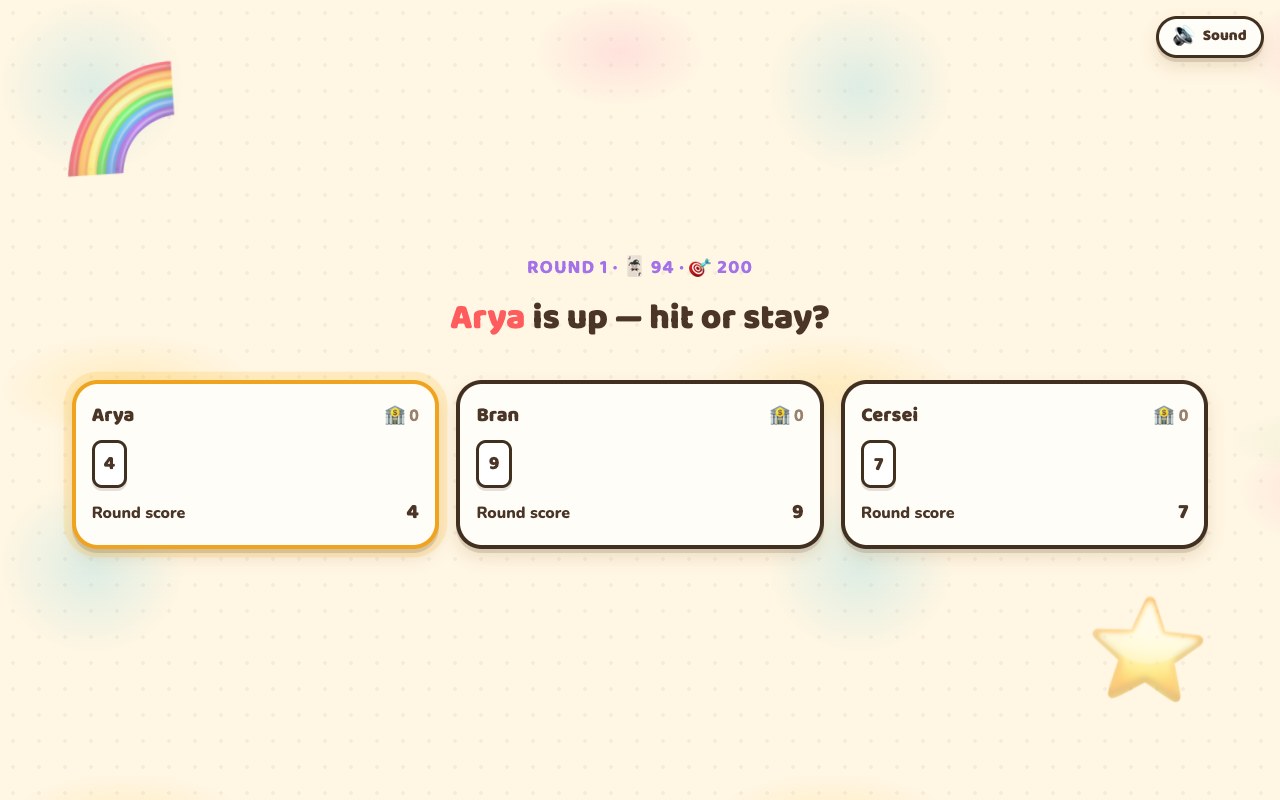
Hit — the server flips the top card, face up
There's no hand to hold: every card you flip lands in front of you where the whole room can see it, on the TV and on everyone's phone. Then the turn passes to the next player, so a big pile is built one card at a time with plenty of time to regret it.
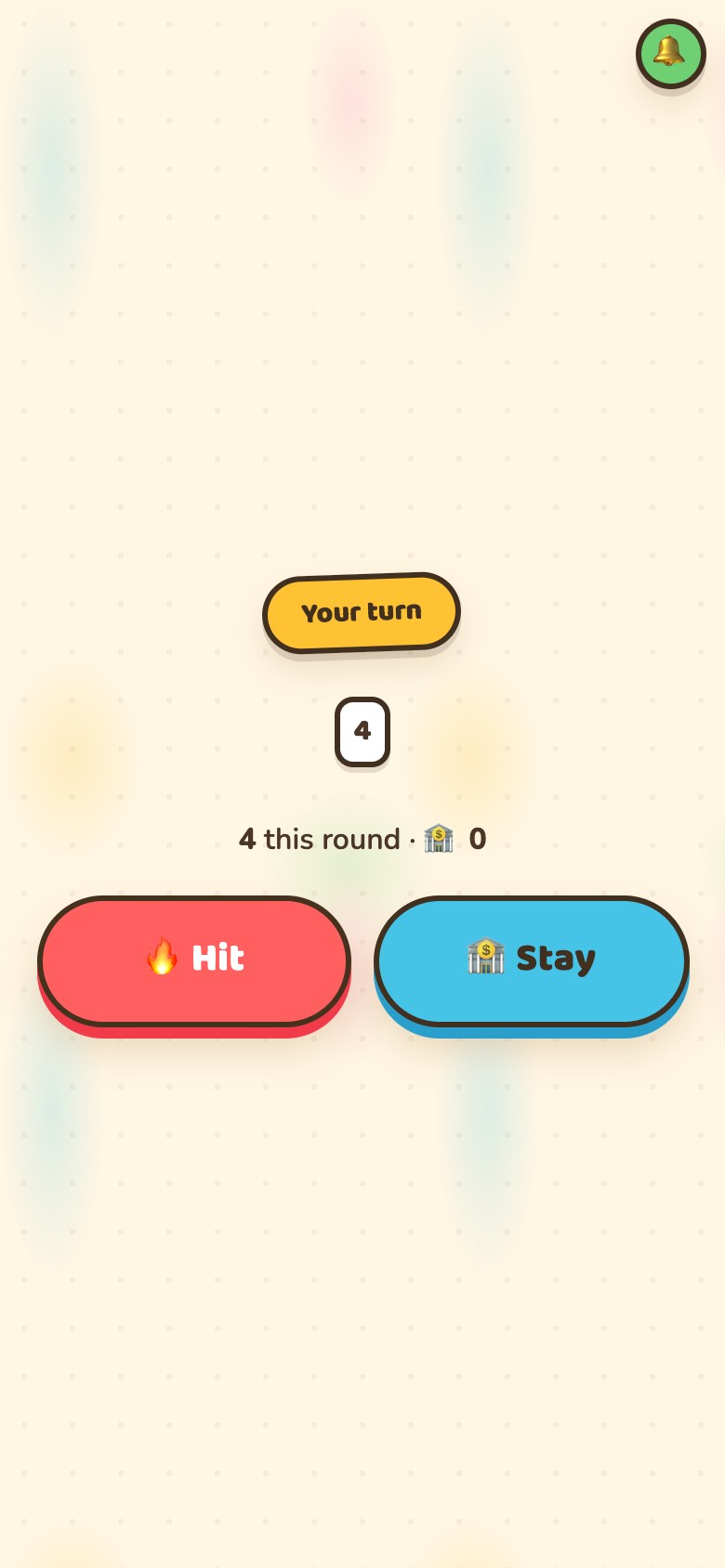
Stay — bank it and sit out the rest of the round
Staying locks your round score into your total and takes you out of the round. You don't get another turn, and you can't be touched by anything that happens next. Everyone else keeps going without you.
Bust — a number you already hold
The round is over for you and you bank nothing. Not the duplicate, not the modifiers, not the fifty points that were sitting there a second ago. Everyone else plays on.
The round ends when nobody's left — or somebody hits seven
Normally a round runs until every player has stayed or busted. But a player who gets 7 different numbers in front of them ends the round instantly, for everybody, takes a +15 bonus — and everyone still in banks whatever they had, ready or not.
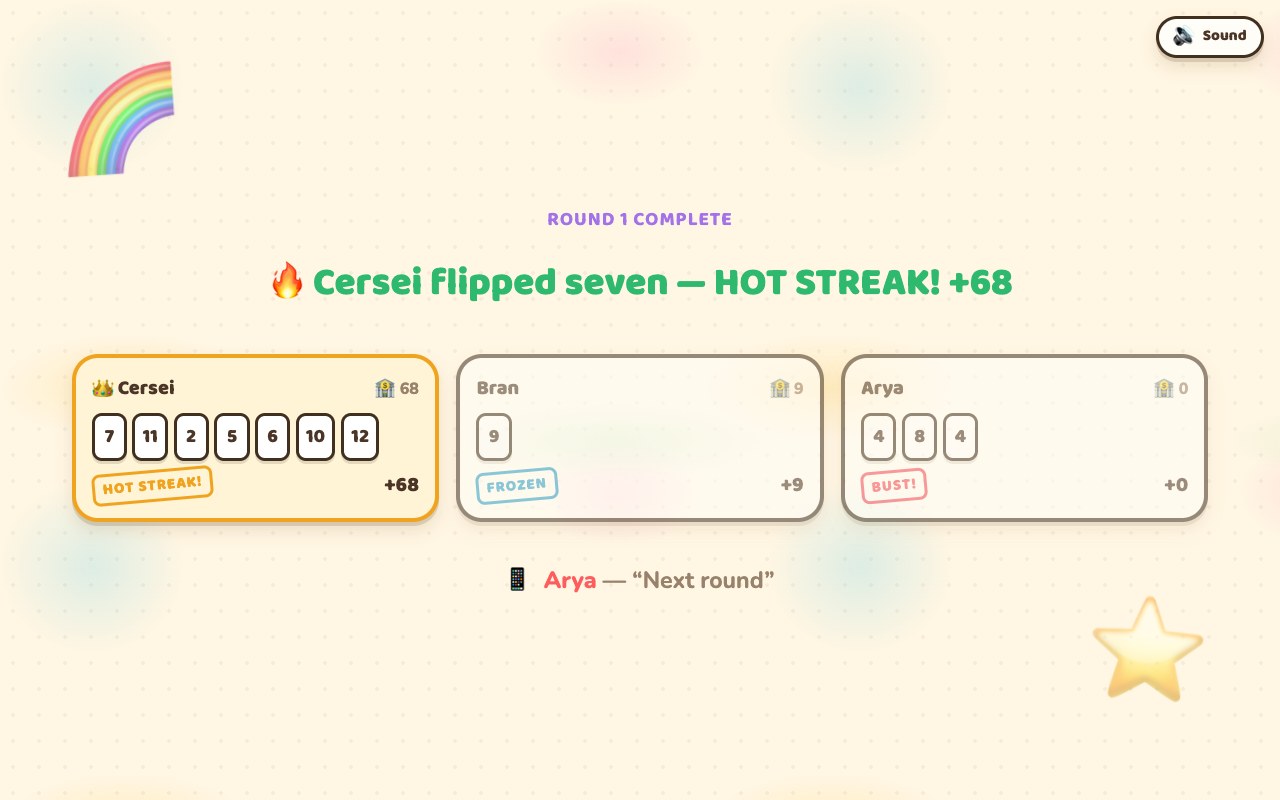
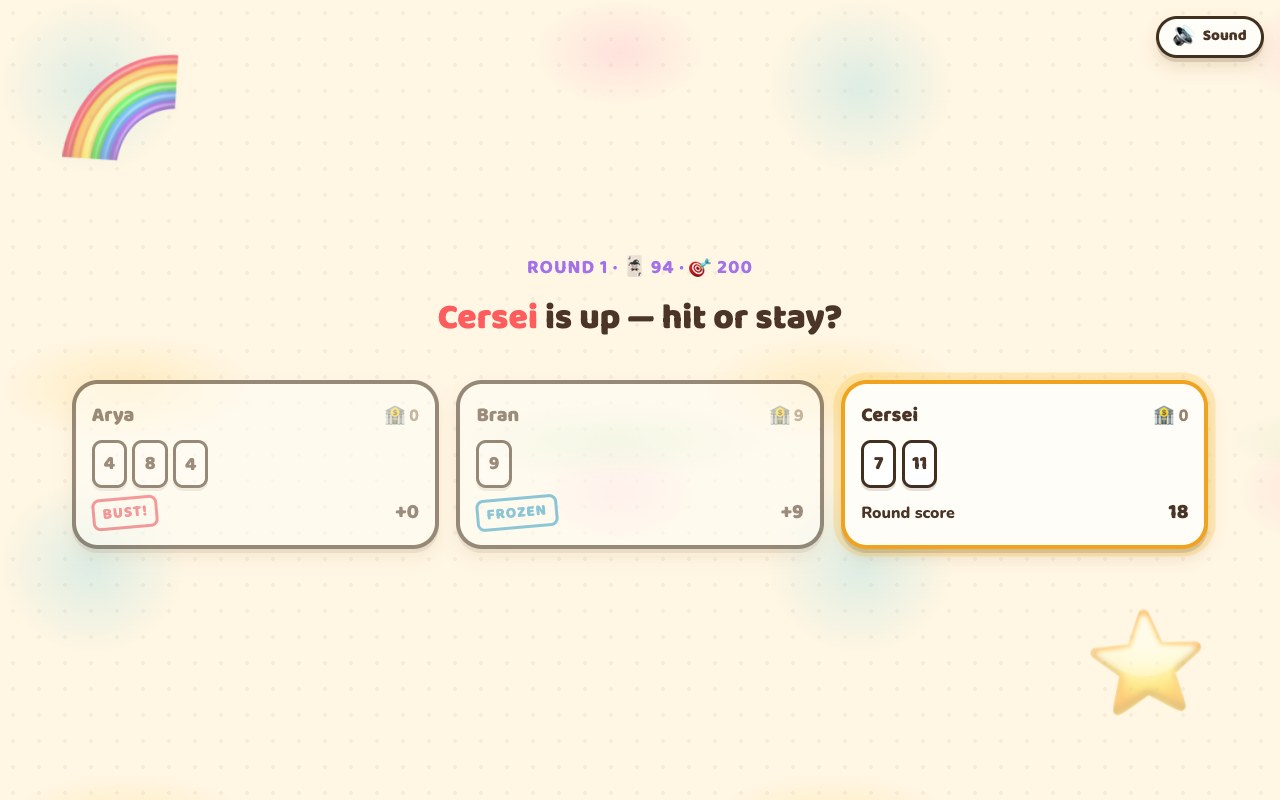
Cersei flipped her seventh number and shut the round down on the spot. Bran was frozen earlier and banked whatever he was holding, whether he liked it or not. Arya drew a second 4 and got nothing. That's a fairly typical round.
What's in the deck
The big numbers are the common ones
Every number card appears as many times as it's worth. There's one 0, one 1, two 2s… and twelve 12s. So the card that would pay you most is also the card most likely to be the one that ruins you.
79 number cards in all. Once you're holding the 9, 10, 11 and 12, more than a third of what's left in the deck busts you — which is why a big hand gets frightening far faster than it feels like it should.
The other cards
Modifiers and actions
Mixed in with the numbers are a handful of cards that don't count toward the streak and can never bust you. Some pay, some point at somebody.
Chance
Three
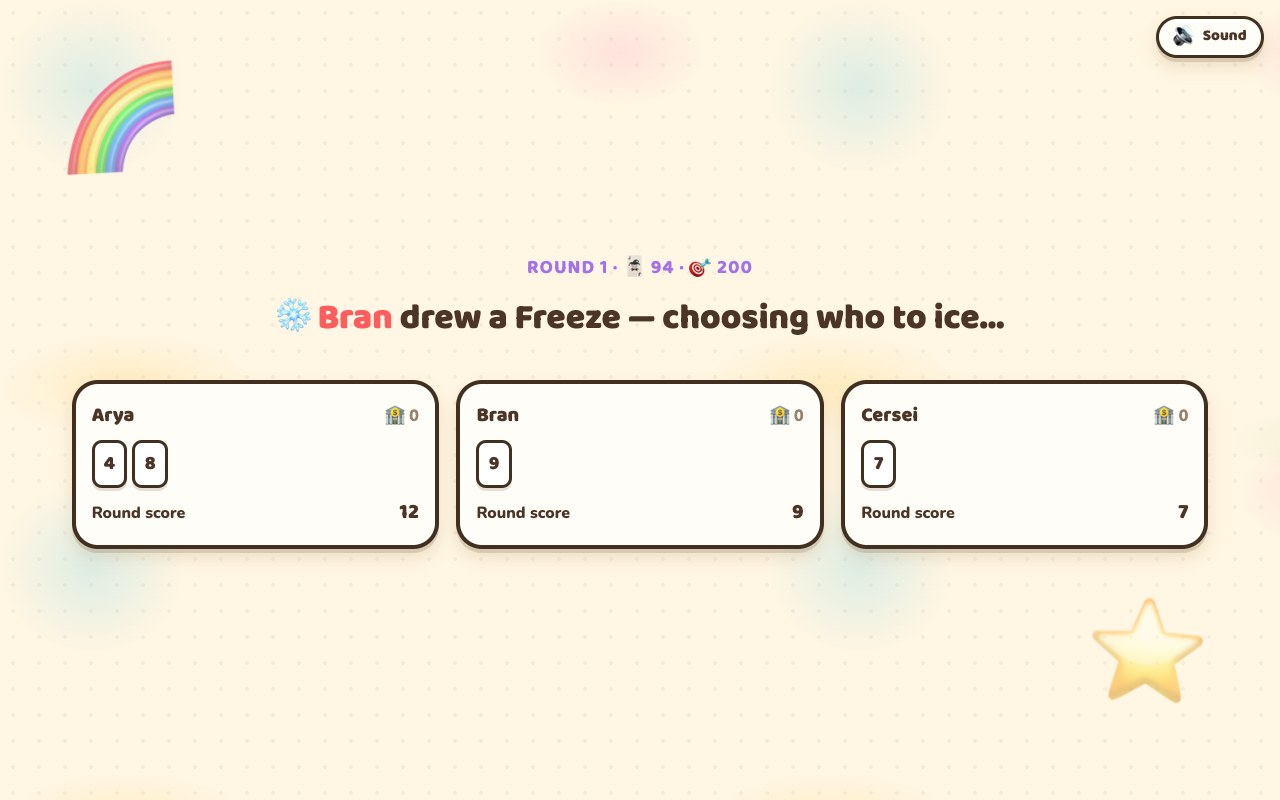
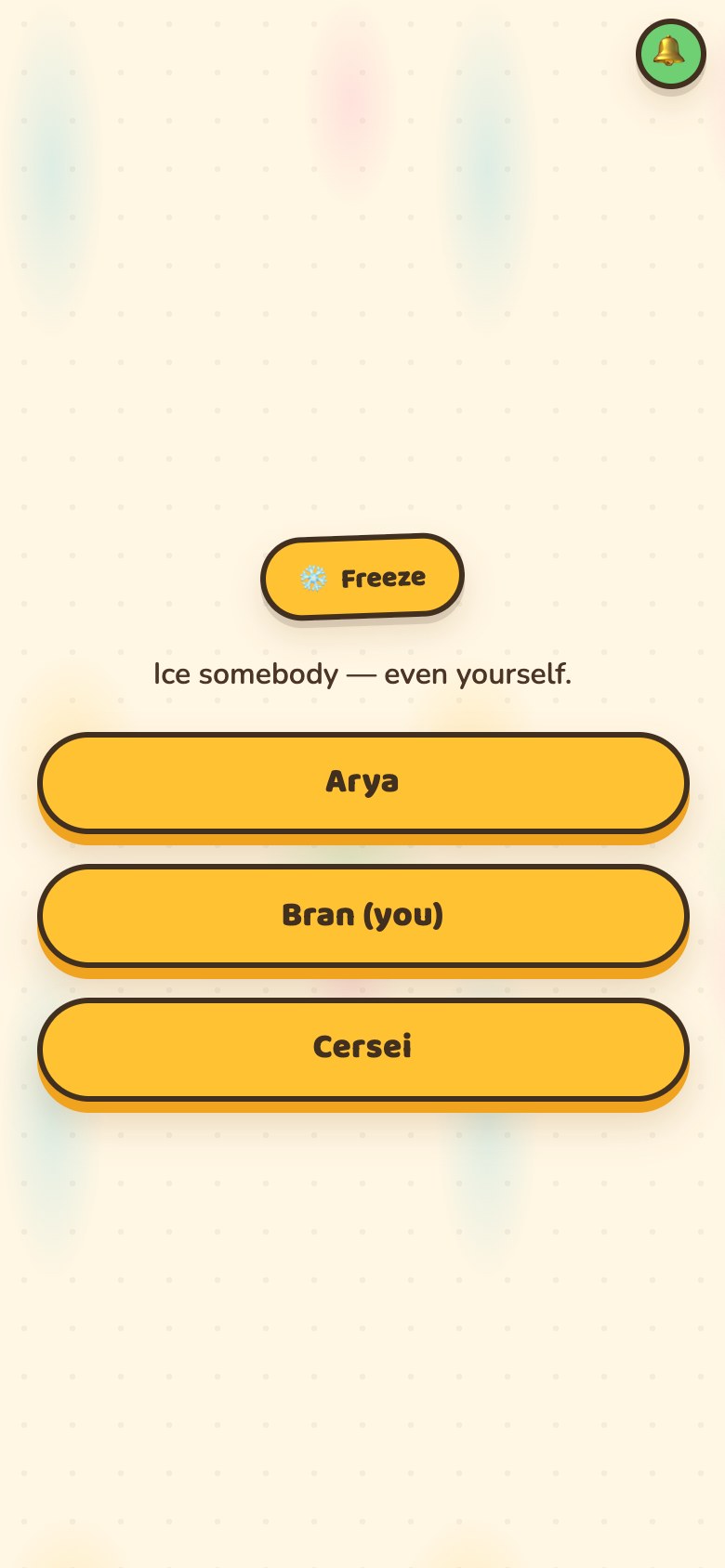
Both action cards are aimed by whoever drew them, which makes them the only social moment in the game: Freeze is a mercy to yourself and a mugging to anybody else, and Flip Three is the reverse.
Scoring
Adding a hand up
In order: sum the distinct numbers, double if you're holding the ×2, then add the adders. The streak bonus, if you earned it, goes on last.
| The numbers | 7 + 3 + 11 | 21 |
| Doubled by the ×2 | 21 × 2 | 42 |
| Then the adder | 42 + 4 | 46 |
The order matters and it favours you: the ×2 doubles the numbers before the adder is applied, so a ×2 early is worth chasing cards for, while a +10 late is a reason to stop.
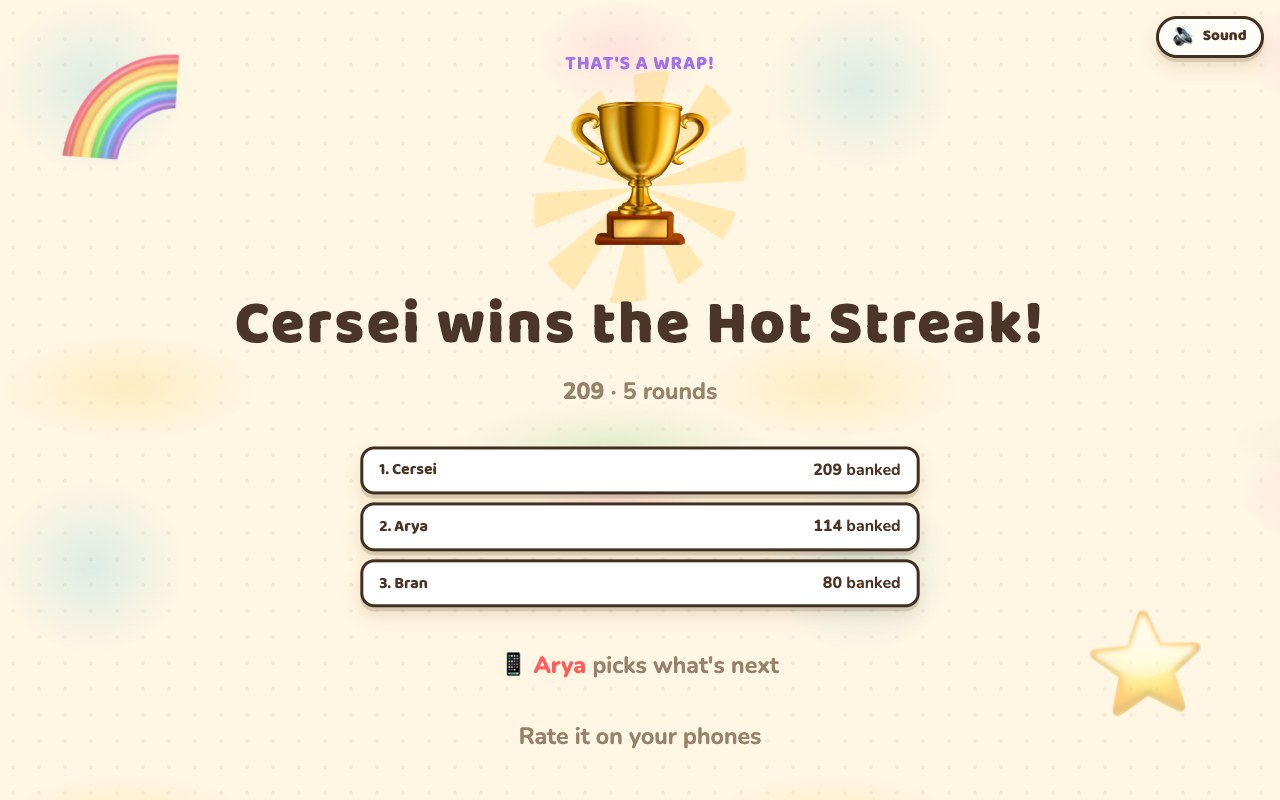
Banked totals only. When a round ends, the game checks whether anybody has reached 200 — if so that's the game, highest total wins, and the round that got them there still counts for everyone else. So a round can be won by somebody who wasn't in front when it started.
Tips
Playing it well
Count your own cards, not your points
Four cards is comfortable, five is a decision, six is a coin flip. The number that should stop you isn't your score — it's how much of the deck now busts you, and that goes up faster than the pile does.
Low cards are safer and cheaper
Holding 1, 2 and 3 means almost nothing in the deck can hurt you — and almost nothing is worth having. Holding 10, 11 and 12 is the opposite. A pile of high cards is worth banking early; a pile of low ones is worth pushing.
A ×2 changes the whole turn
It doubles numbers, so it's worth most on a hand you're going to keep growing. Draw it early and it's an argument for one more flip; draw it on a big hand and it's an argument for stopping immediately, because you're now risking twice as much.
Freeze yourself. Genuinely.
You can target yourself, and on a hand you were about to have to gamble with, that's the best card in the deck: a guaranteed bank. Spending it on the leader feels better and is usually worth less.
Flip Three is a weapon, and a rescue
Aimed at a fat hand it's close to a kill. Aimed at yourself on two low cards it's three free cards toward a streak. Look at the table before you assume it's an attack.
The seven-card streak ends everyone's round
Which cuts both ways: if the player before you has five or six numbers down, your round may be about to close whether you're ready or not. Bank before they do rather than being caught mid-build.
Being behind is a licence
Totals are all that matter and there's no prize for second. If the leader is within a round of 200, a bust costs you nothing you were going to keep — push until it breaks.
Watch what's gone
Everything is face up, all round. If the 12s have been coming out all over the table, the 12 in your hand is much less dangerous than it looks — the deck the room can see is the deck you're drawing from.
In short
The seven things to remember
- On your turn: flip another card, or bank and sit out.
- Every card is face up. There are no secrets.
- A repeated number busts you — the whole round, gone.
- Each number appears as often as it's worth. The 12s are everywhere.
- ×2 doubles your numbers; adders go on after.
- 7 different numbers ends the round for everybody, +15.
- First past 200 at a round's end wins.