Eldoria · a party game for the TV
How to play
Wavelength
A spectrum runs from one idea to its opposite. One of you — the psychic — can see a hidden target on it, and gives a clue that lives right there. Everybody else dials in blind, and the average of your dials is what gets scored. You're all on the same side.
The whole game in one picture
One clue, one guess, four rings
The spectrum is Cheap → Expensive. The target — which only the psychic can see — is at 78. They wrote “a wedding cake”. Three people dialled without conferring, and the team lands on the average of the three.
The three thin marks are Arya's 86, Daenerys's 71 and Bran's 64. None of them is especially close on its own; the average of them lands four off the target, in the innermost ring, and the team takes the full 4. That's the game's one clever trick: nobody has to be right. You have to be wrong in opposite directions.
Setting up
Getting everyone in
Open Wavelength on the TV
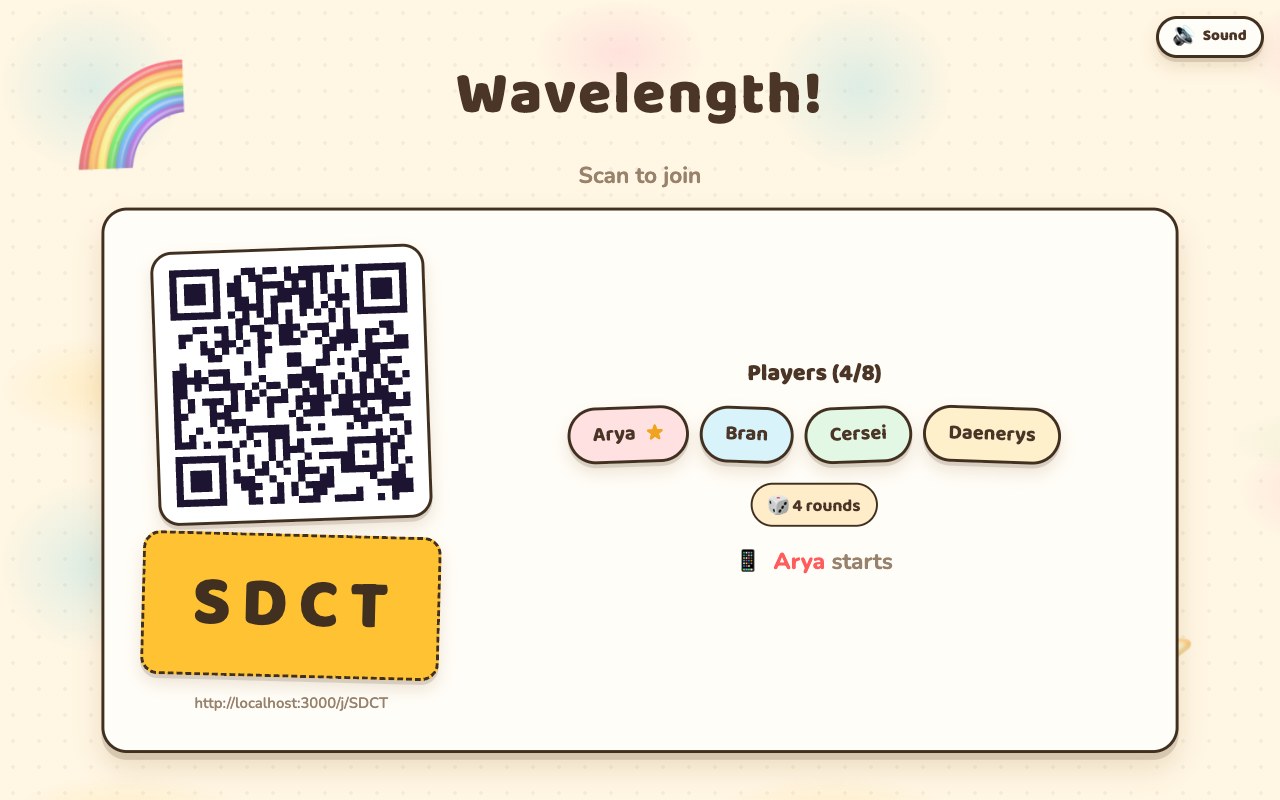
Pick Wavelength from the party-games home screen. The TV puts up a four-letter room code and a QR code.
Everyone joins from their phone
Scan or type the address, add a name, done. Your colour in the lobby is the colour your dial wears on the TV when the round is revealed, so you can see exactly how wrong you were.
The host picks a length and starts
First to join is the host. 4, 8 or 12 rounds, then start. The psychic's seat moves round the table one player at a time, starting from a randomly drawn point — so with a short game and a big crowd, who gets a turn is luck rather than who joined first.
The loop
What happens in a round
The psychic sees the target
The TV shows the spectrum and nothing else. The psychic's phone shows the same spectrum with the target marked on it, and a number: the exact spot they have to point everyone at.
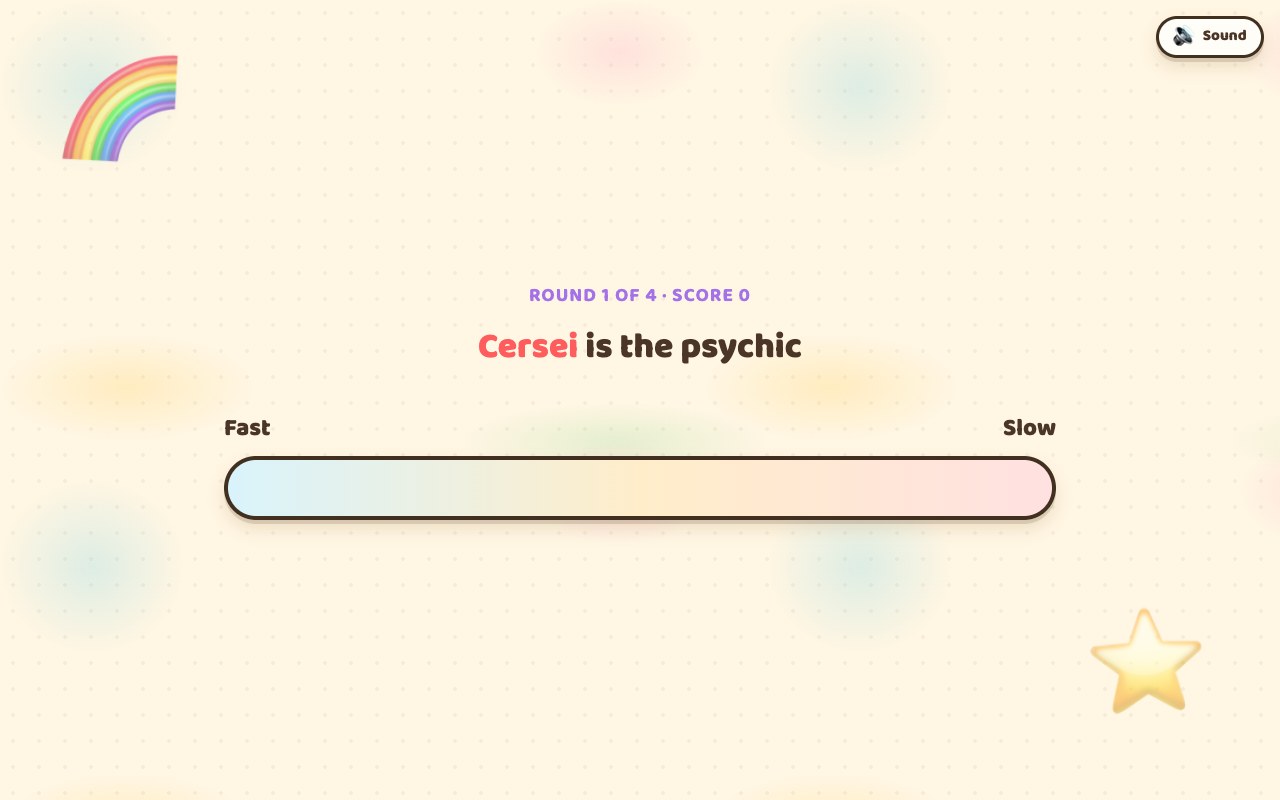
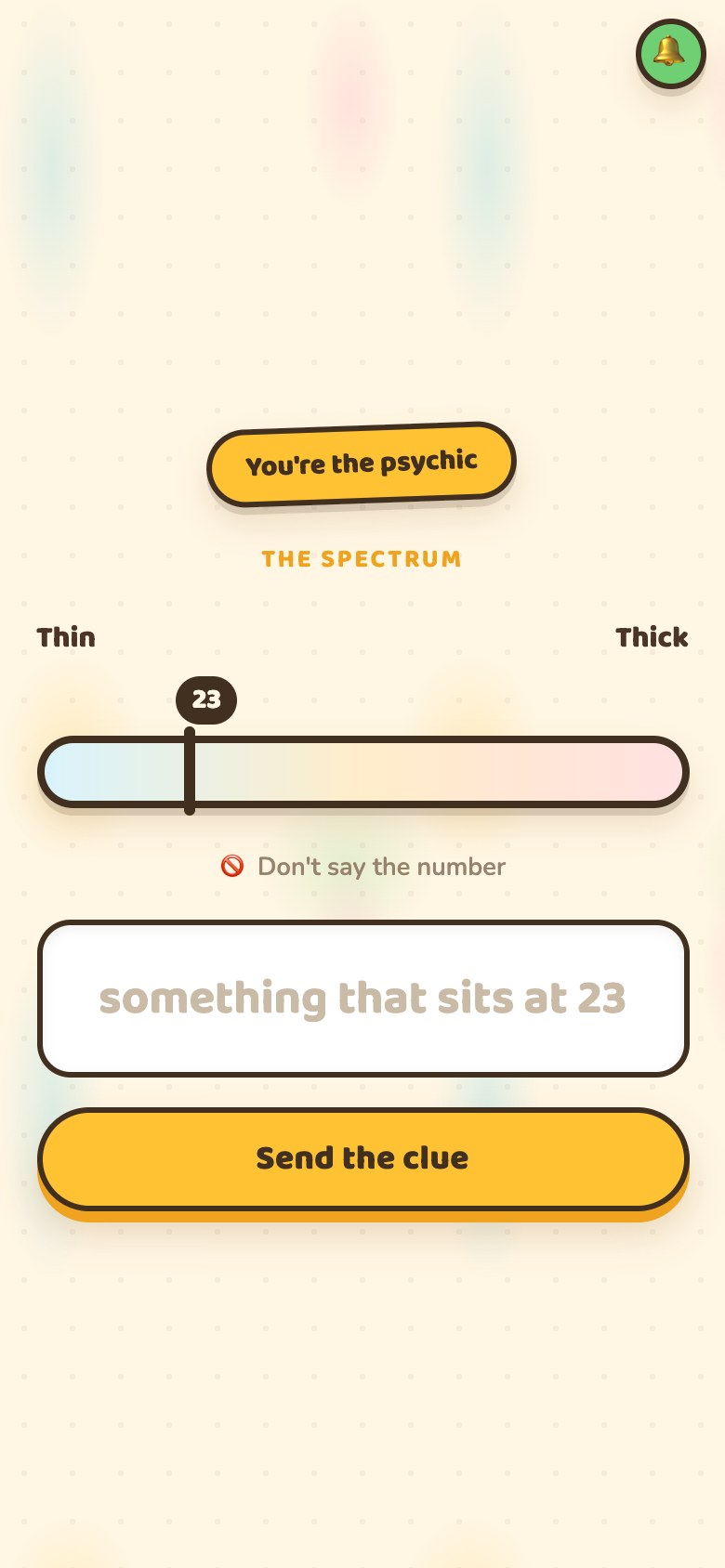
They write one clue
Anything up to 60 characters — a thing, a person, a phrase. Not the number, obviously, and no pointing at the screen. The clue goes to the TV and to every phone at once.
The clue is the whole of the psychic's turn. They don't get to explain it, nudge anybody, or take it back.
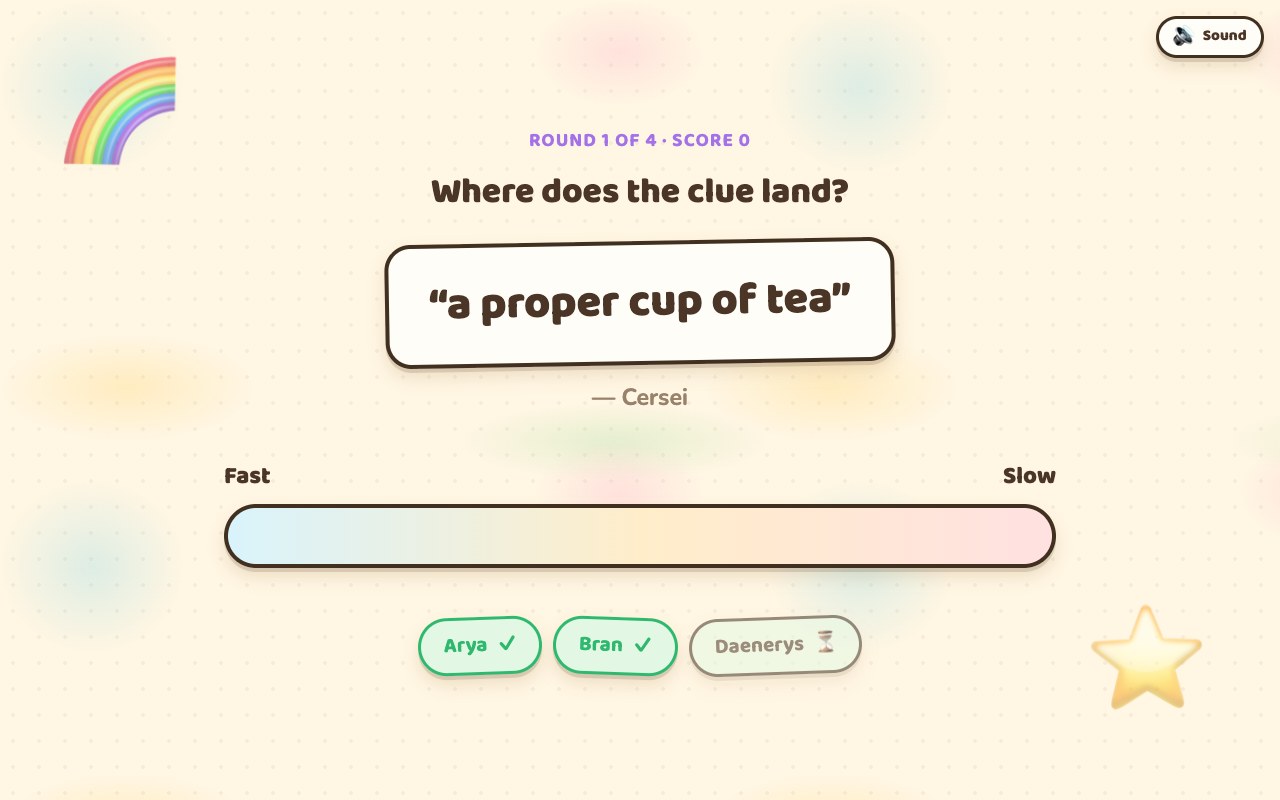
Everyone else dials
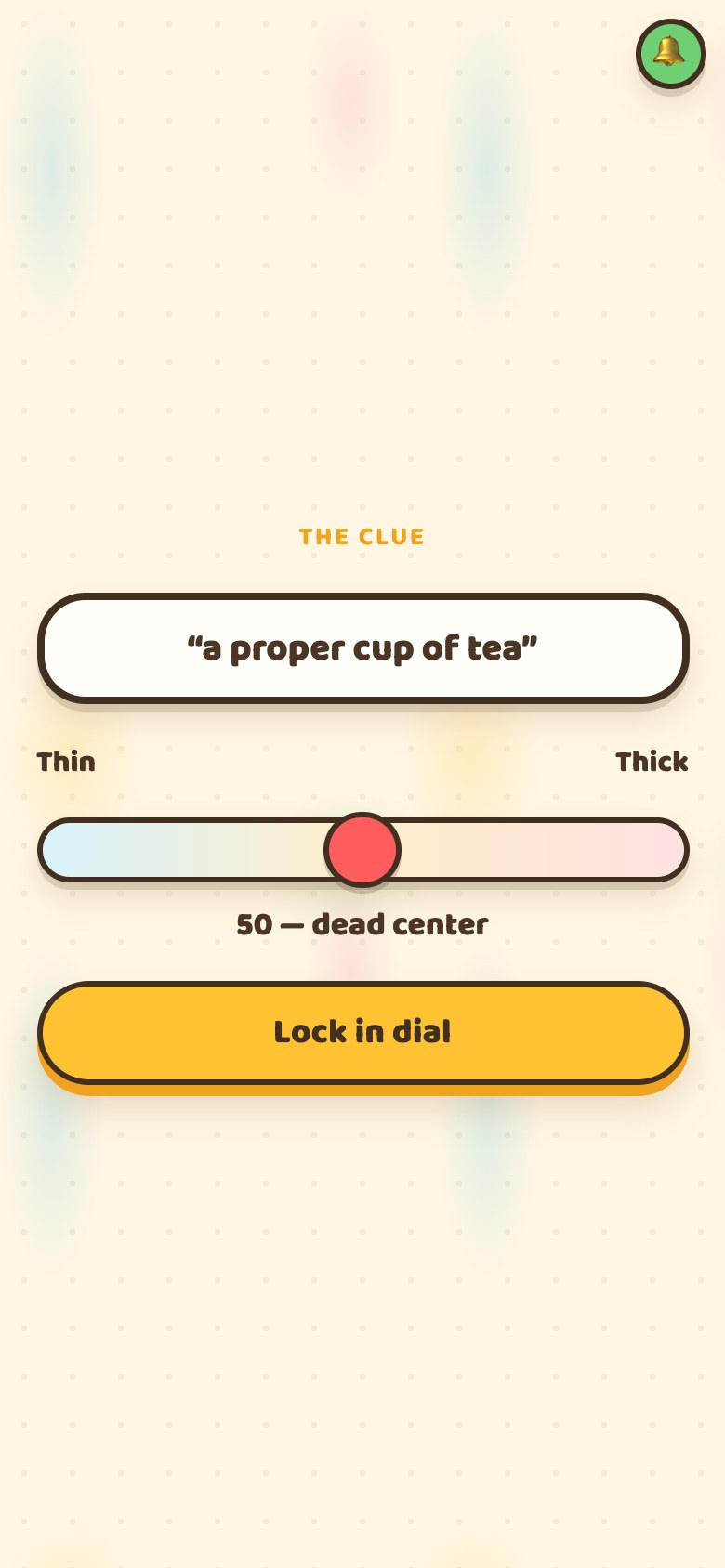
A slider, 0 to 100, on your own phone. You can't see anyone else's dial while you're setting yours — the TV only counts how many are in. Locking in isn't final either: the button becomes Update dial and you can nudge it until the last person commits, which is when the round closes.
The average gets scored
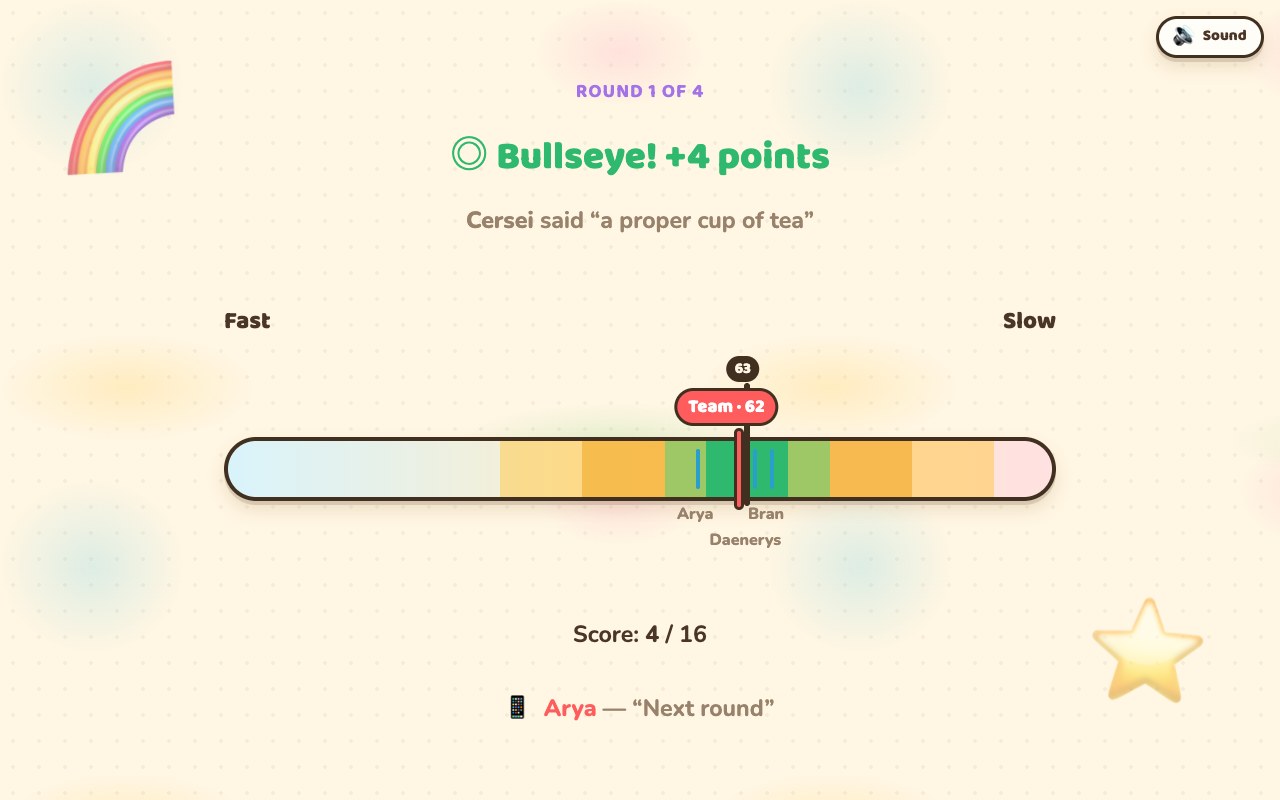
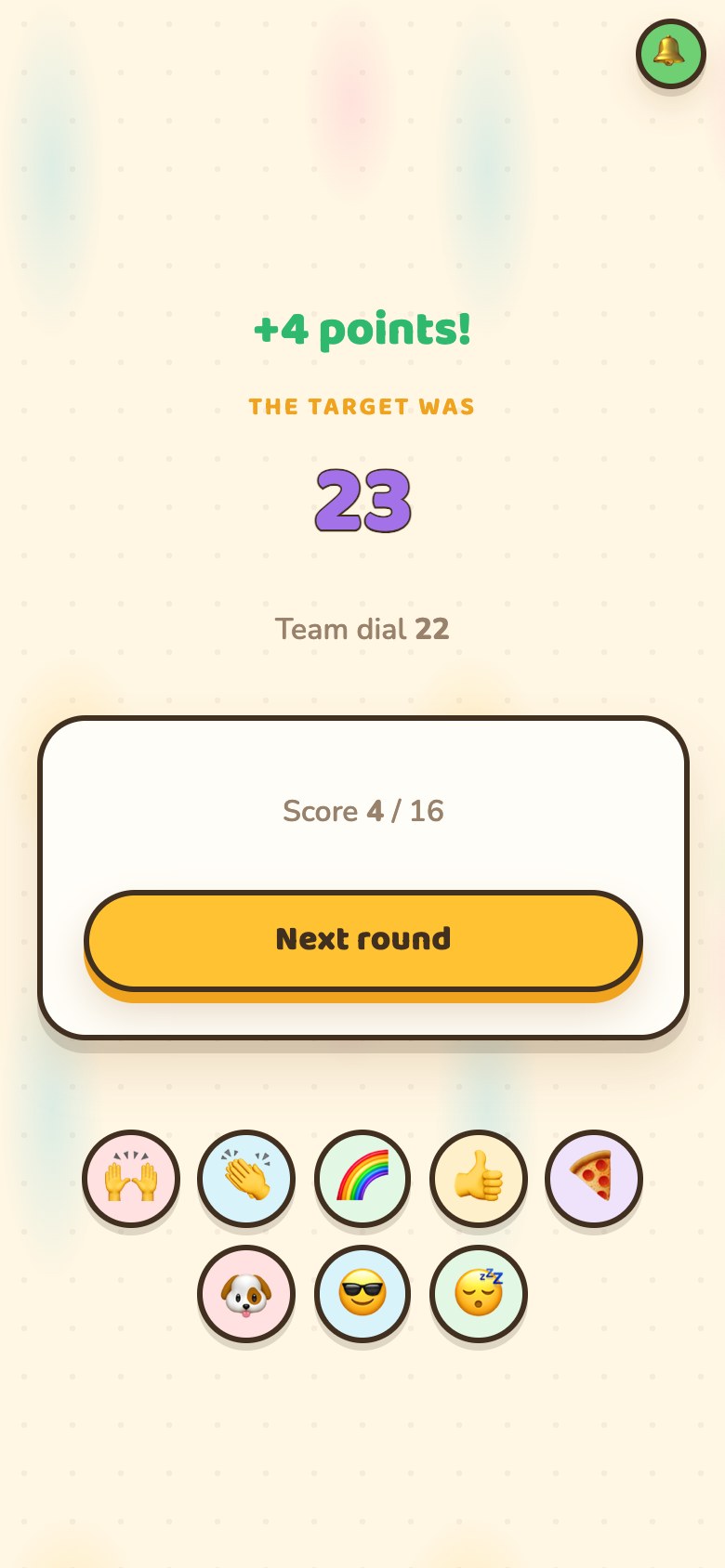
Everything lands at once: the target, every individual dial with a name on it, and the team dial — the plain average of them all. How far that average sits from the target is the round's score.
Scoring
How close is close enough
Four rings around the target, and only the team dial is measured against them. An individual dial is never scored — it just pulls the average.
| The team dial lands | Points |
|---|---|
| within 5 of the target | 4 |
| within 10 of the target | 3 |
| within 20 of the target | 2 |
| within 30 of the target | 1 |
| further out than 30 | 0 |
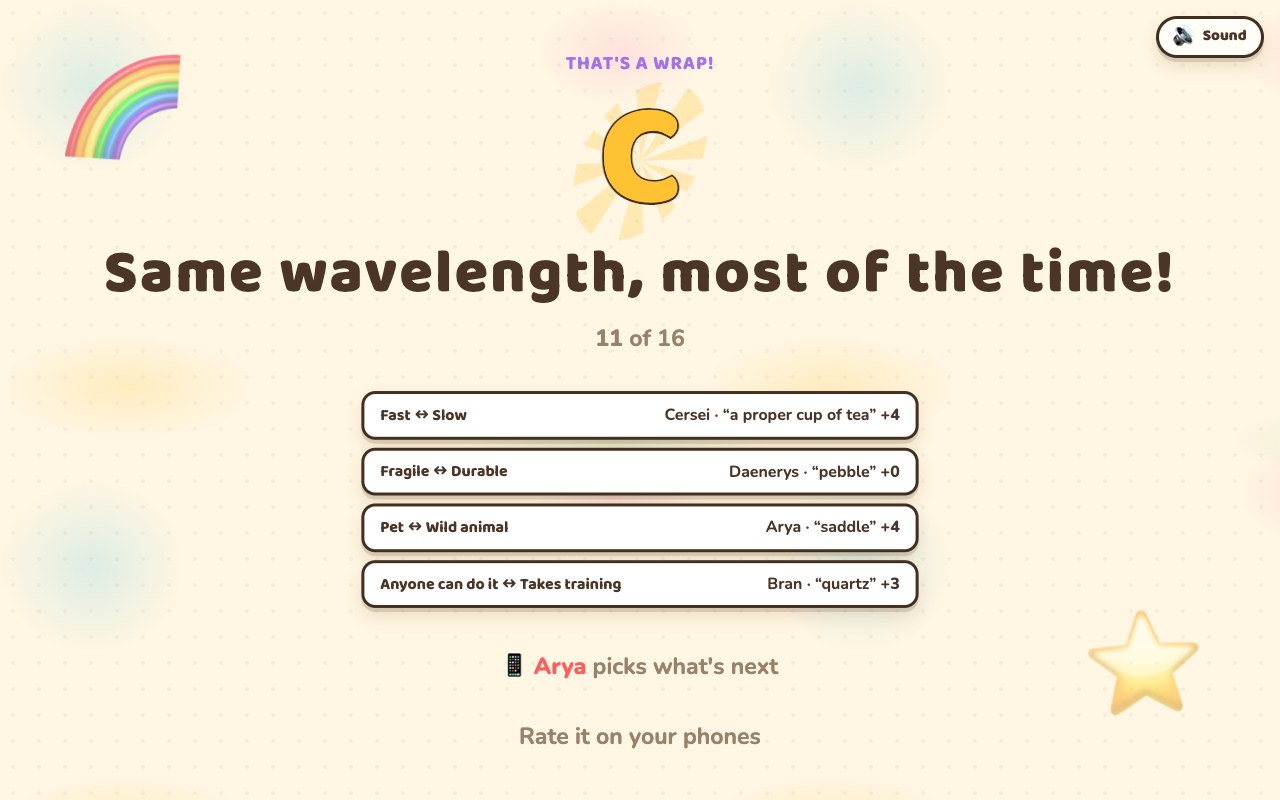
So a round is worth 0 to 4, and a game of 8 rounds is out of 32. The total gets turned into a letter grade at the end — but the number that matters during the game is how often you clear the outer ring at all. Two points is a good round.
The bit that catches people out
The average punishes hedging
Because only the average is scored, a dial in the middle isn't a safe dial — it's a heavy one, dragging the team back toward 50 whatever everyone else thought. Two players who commit to 80 and 84 score better than three who go 80, 84 and “I'll just sit near the middle to be safe”.
Same clue, same target, same two confident players — and one person parking at 50 costs the team three points. If you genuinely have no idea, guess anyway: a bad guess in the right half is worth more than a safe one in the middle.
Tips
Playing it well
Psychics: clue the spot, not the side
A target at 78 is not “expensive”. Expensive is 95. Find the thing that sits at three-quarters — pricey but not absurd — and say that. The commonest way to lose a round is a clue that's in the right direction and twenty points too far along it.
Psychics: aim at the room, not at yourself
Your clue has to land in other people's heads. A band you love, a film nobody else has seen, an inside joke with one person — all of these are precise for you and noise for everybody else. Boring and shared beats clever and private.
Dialers: don't hedge
Only the average is scored, so the middle is not neutral ground — it's a vote for 50. Commit to where you actually think it is. Two decisive wrongs really do make a right here.
Dialers: ask what they didn't say
Psychics reach for the strongest example they can when the target is at an extreme. A mild, hedged, slightly odd clue usually means the target isn't at the end — otherwise they'd have said something obvious. Read the strength of the clue, not just its content.
You can talk, and it's a trade
Nothing stops the table discussing a clue out loud, and a group that argues scores better than one that doesn't. But you'll converge on one number — which means one shared mistake instead of several cancelling ones. Loud tables should be surer than quiet ones.
The two ends are not the same distance apart
“Loud → Quiet” is a smooth ramp; “Scary → Not scary” is a cliff with everything piled at one end. Look at the spectrum before you read the clue and work out where its middle honestly is.
Nudge, don't wait
Lock a dial in early and keep tweaking it — the round doesn't close until the last person commits, and nobody can see your number in the meantime. Holding back only slows the table down.
Everyone's turn as psychic is worth watching
You learn how each person clues — who over-eggs the extremes, who is always ten low. Two rounds in, you're not reading the clue, you're reading the person, and that's when the scores start climbing.
In short
The six things to remember
- One player sees a hidden target on a spectrum.
- They give one clue that sits exactly there.
- Everyone else dials 0–100, without seeing each other.
- The average of the dials is what gets scored.
- Within 5 is 4 points; past 30 is nothing.
- One score for the whole table, graded A to F.