Eldoria · a party game for the TV
How to play
Play Nine
Golf, with cards. You've got eight cards in a grid, six of them face down. Every turn you take one card and swap it in — or throw it away to look at one of your own. A column of two matching cards cancels to nothing, and the lowest score at the end wins.
The whole game in one picture
A matched column is worth nothing at all
Your grid is two rows of four, and it's the columns that matter. Each column is scored on its own: normally the two cards added together, but if the two cards match, the column is worth zero — however big the number.
Which turns the worst card in the deck into the best one, as long as you can find its twin: two 11s are worth less than an 11 and a 2. Two of those columns on the same number and you're paid -10 for the trouble — the columns don't have to be next to each other. The −5 is the one column that never cancels: a matched pair of those is worth -10, and still counts toward the bonus.
Setting up
Getting everyone in
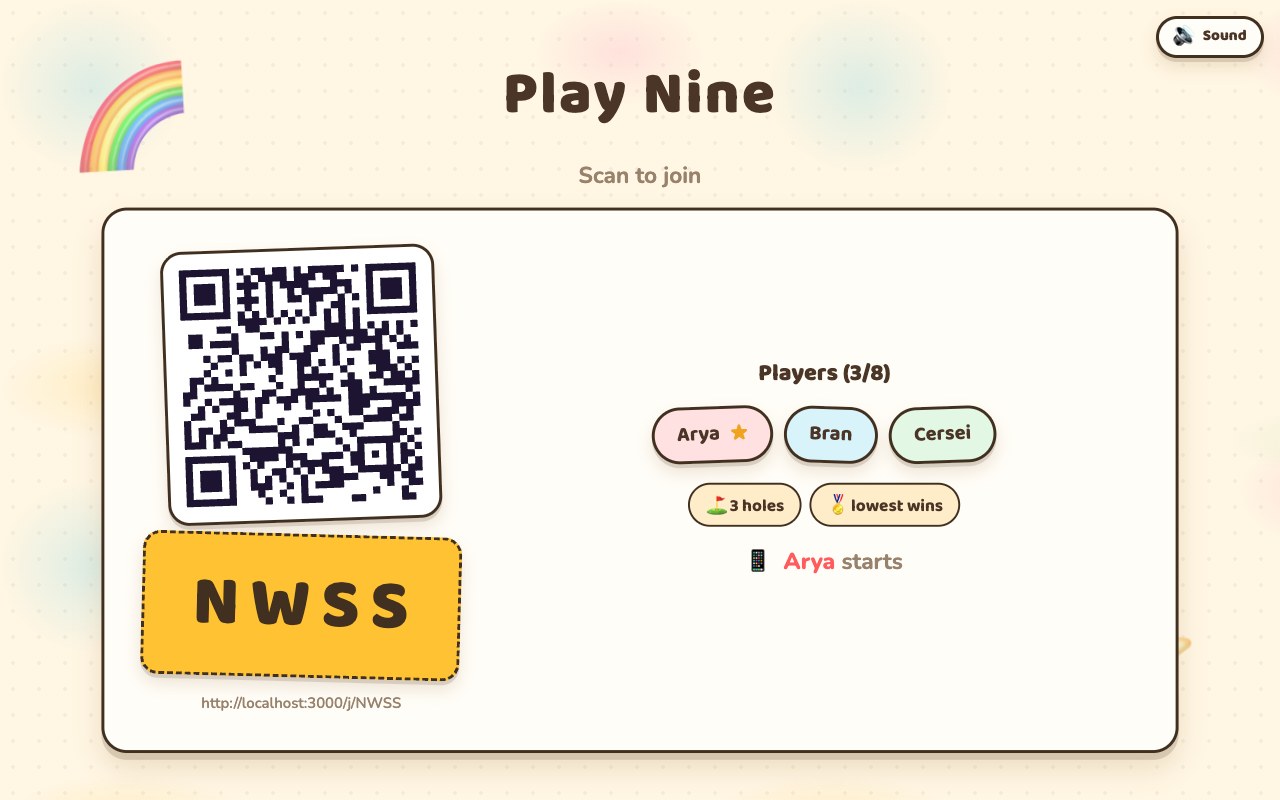
Open Play Nine on the TV
Four-letter room code, QR code, and that's the setup done.
Everyone joins from their phone
Scan, name, in. Turn order is join order, and it holds for every hole.
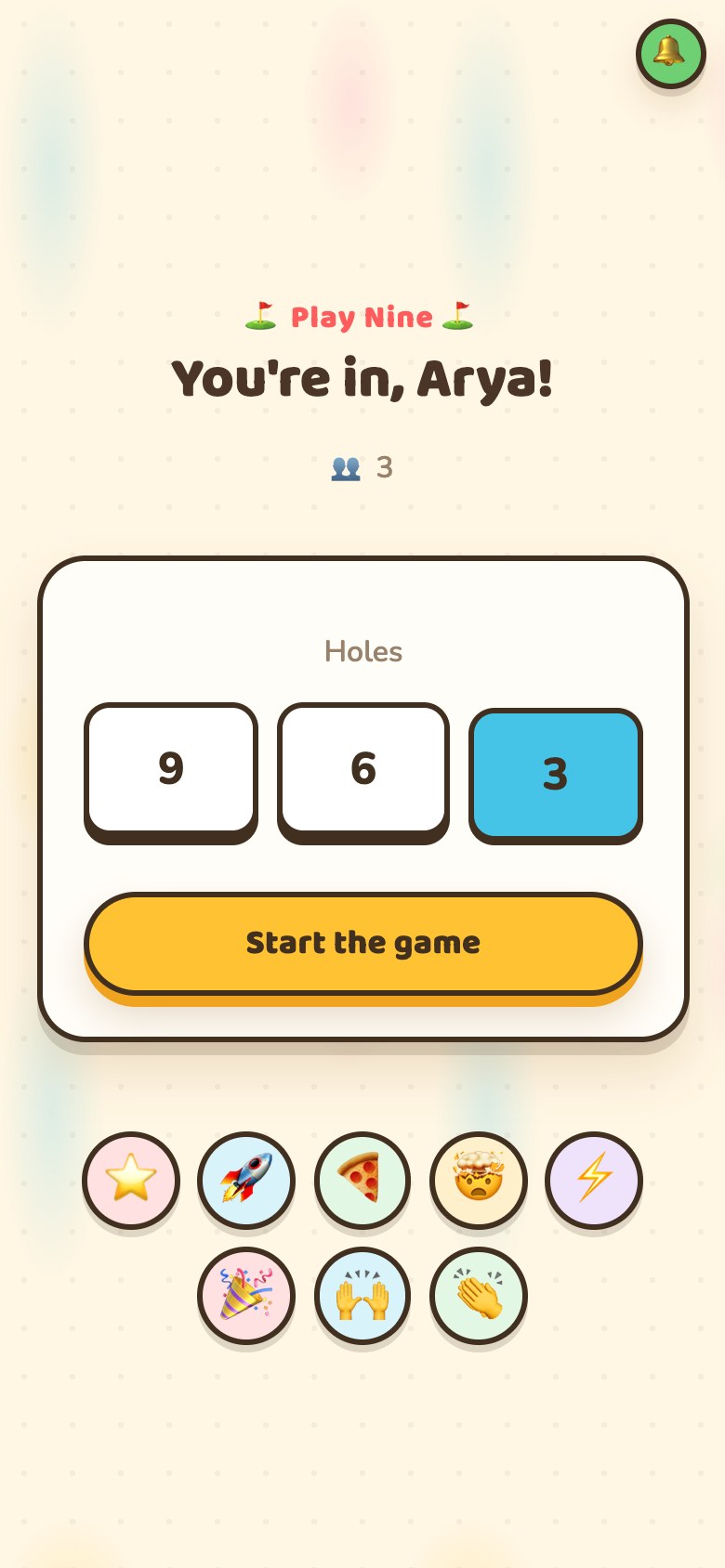
The host picks how many holes
9, 6 or 3. Each hole is a whole hand, dealt and scored on its own; your scores add up across them and the total at the end is your round of golf. Three is a quick game, nine is a proper one.
The loop
How a hole plays
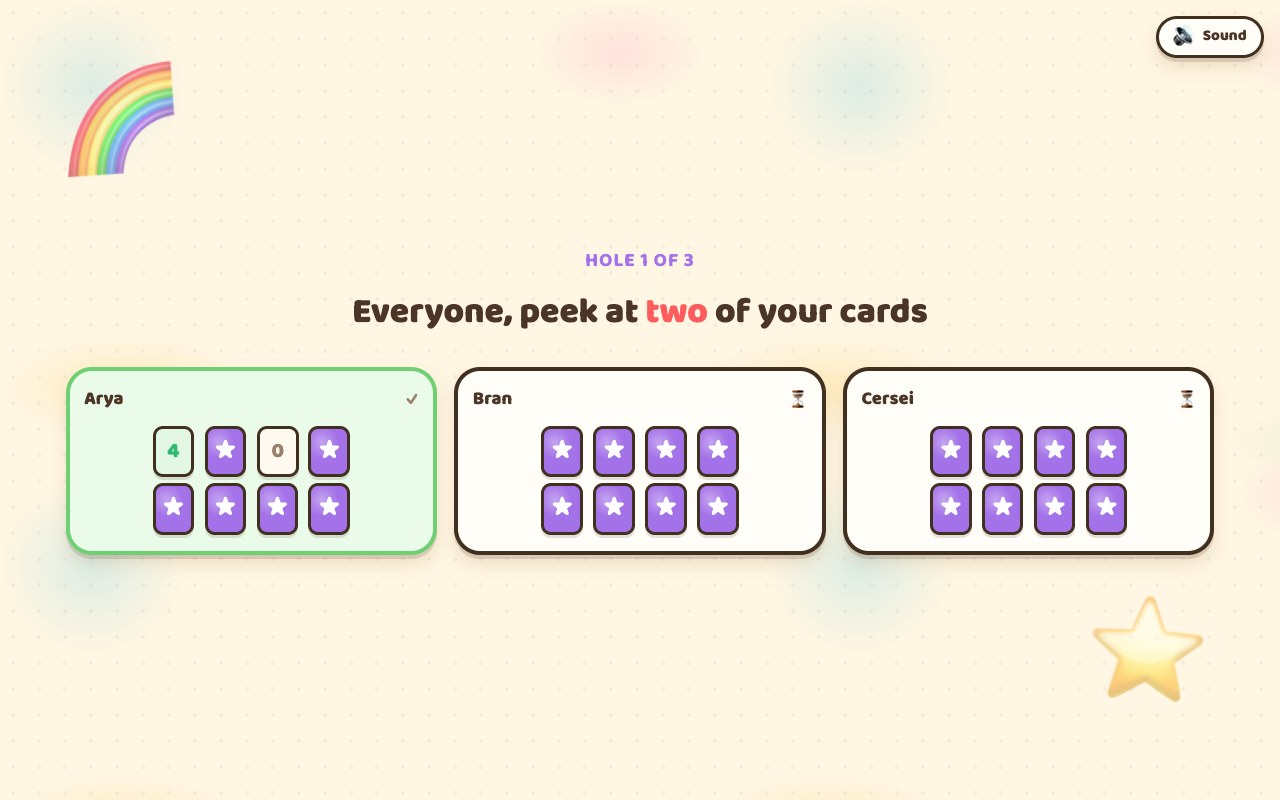
Everyone turns two cards over
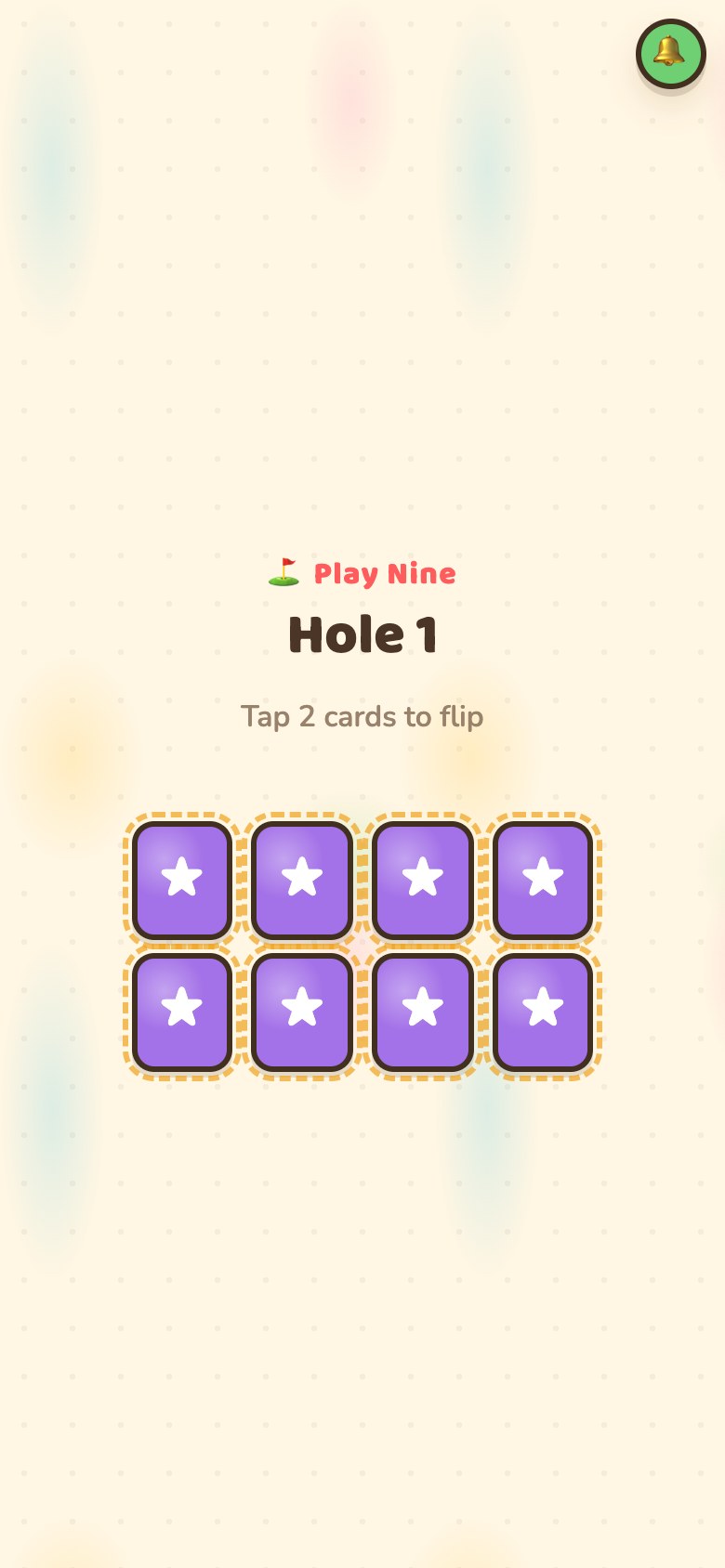
You get eight cards face down and pick 2 to look at. Everybody does this at once, and what you turn over is public — it goes straight up on the TV. Six of your eight cards are still a mystery to you as well as to everyone else.
On your turn: take a card
Two places to take one from, and the choice matters more than it looks:
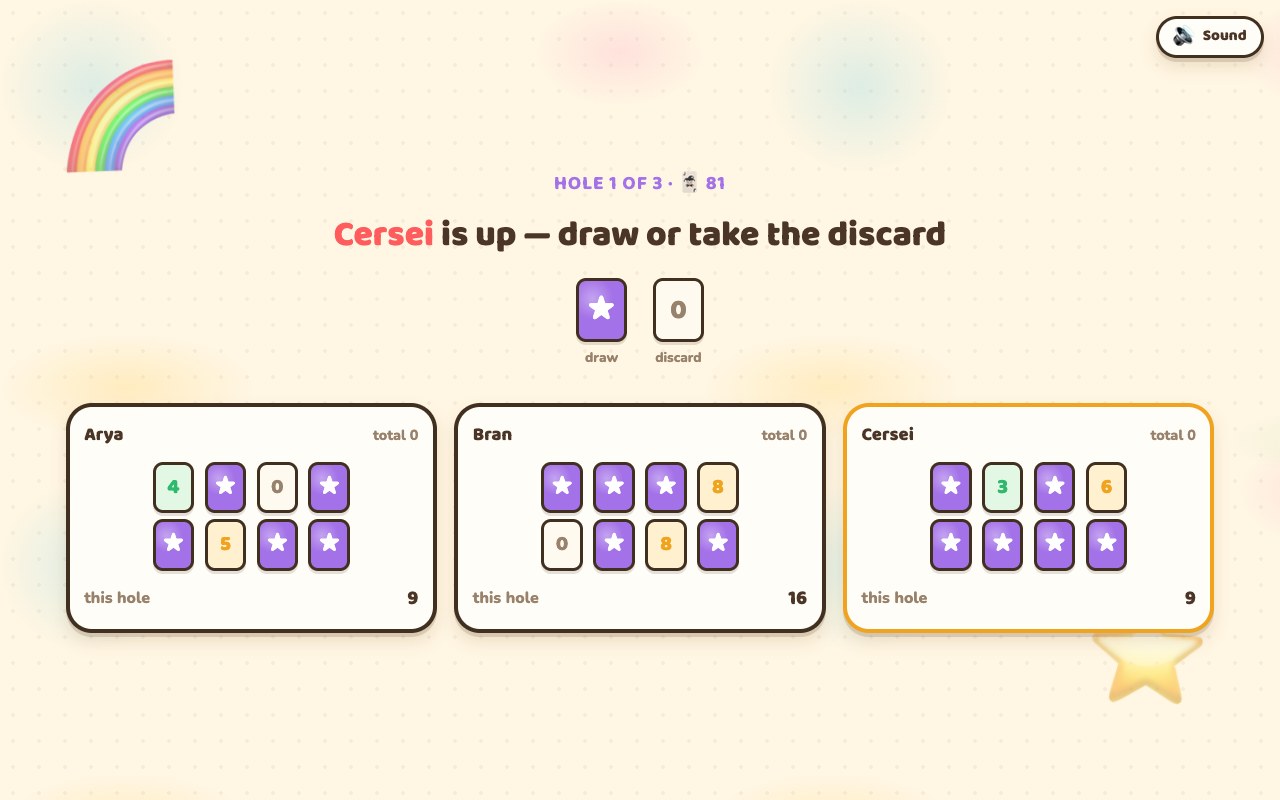
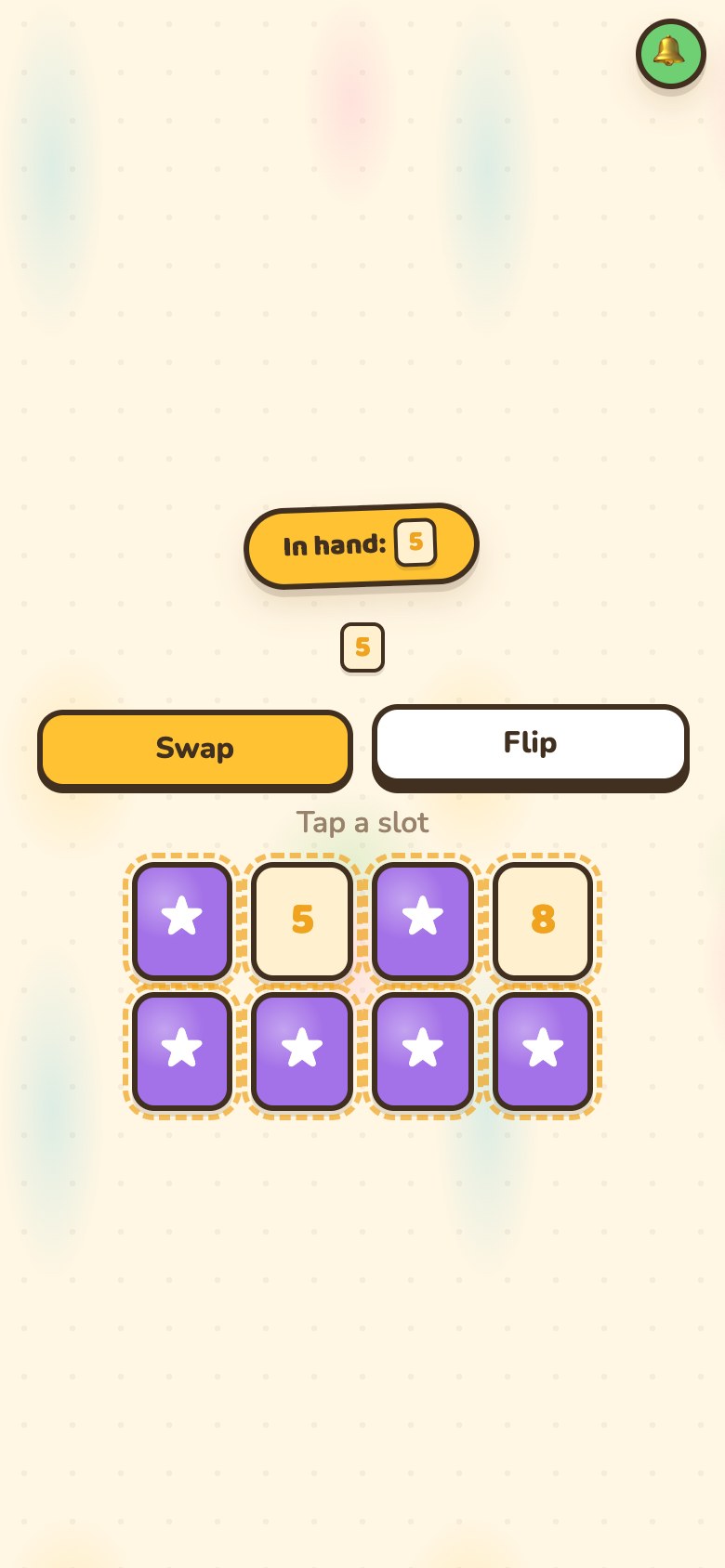
Whatever you swap out goes face up on the discard
Every swap replaces a card — face up or face down, your choice — and the card that comes out lands on the discard pile for the next player to take. So a good card you don't need is a gift to the person on your left.
A slot you swap into is always face up afterwards. There's no putting something back down unseen.
The first grid fully face up “goes out”
The moment somebody's last face-down card is turned over, they're done — and everyone else gets exactly one more turn, in seating order. Each grid is turned face up as soon as its owner's last turn ends, so the table fills in one player at a time, and then the hole is scored.
Which means going late in that order costs you: by the time it's your turn, everything the players before you were hiding is already on the TV.
Going out doesn't win you anything by itself. It just stops everybody else fixing their grid.
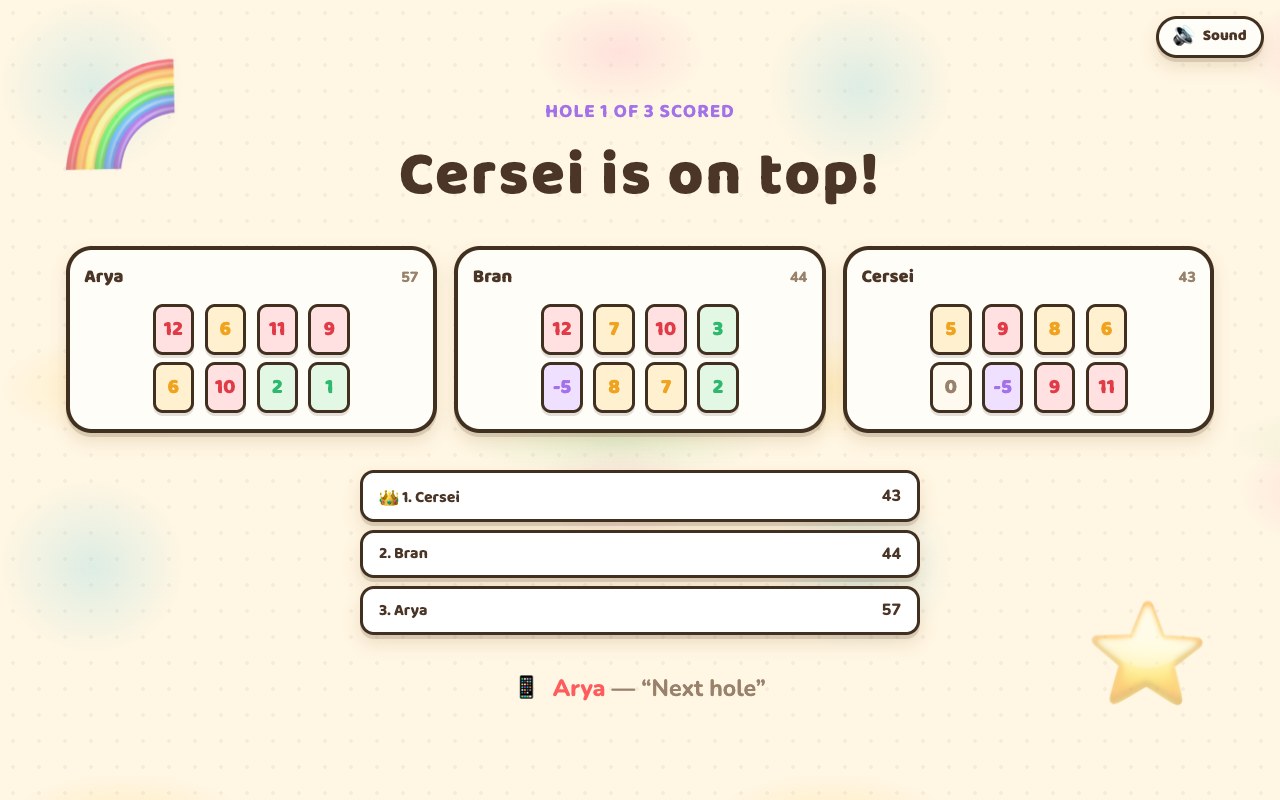
Every card is turned over and every column is priced. The table underneath is the whole game so far, lowest on top — and the gap between the top row and the bottom is usually one or two columns that cancelled, which is why nothing on the losing grid looks especially wrong.
One small escape
When you're down to one hidden card
Turning your last card over ends the hole for everybody, and sometimes that's the last thing you want — you're sitting on a bad grid and you'd like another lap to fix it. So with exactly one card still face down, a card drawn from the deck can simply be thrown away: your phone offers a Skip, you keep your last card hidden, and the turn passes.
It only appears at one card down. With two or more still hidden, turning one up doesn't finish your grid, so there's nothing to duck.
Scoring
Adding a grid up
Column by column. A matched pair scores 0 — or -10 for two −5s. Everything else is just the two numbers added together. Then any number you matched in more than one column pays a bonus on top.
| Column | Cards | Points |
|---|---|---|
| 1 | −5 and −5, matched | -10 |
| 2 | 9 and 9, matched | 0 |
| 3 | 7 and 3 | 10 |
| 4 | 0 and 12 | 12 |
| The hole | 12 |
Two matched columns took eighteen points of cards off the board and the hole-in-one pair went ten below zero. The two unmatched columns are the entire score.
Matching the same number twice pays
Two matched columns showing the same number are worth -10 beyond the nothing they already score, and it climbs from there. The columns can sit anywhere in your grid — they don't have to be side by side.
| Matched columns on one number | Cards | Bonus |
|---|---|---|
| Two | four of a kind | -10 |
| Three | six of a kind | -15 |
| Four | the whole grid, eight of a kind | -20 |
So a grid of 8-8 / 8-8 / 3-3 / 12-4 scores -10 + 0 + 16 = 6: the four 8s cancel and pay, the 3s cancel, and the last column is the whole score. Hole-in-ones stack both ways — two matched −5 columns are -20 for the faces plus the -10.
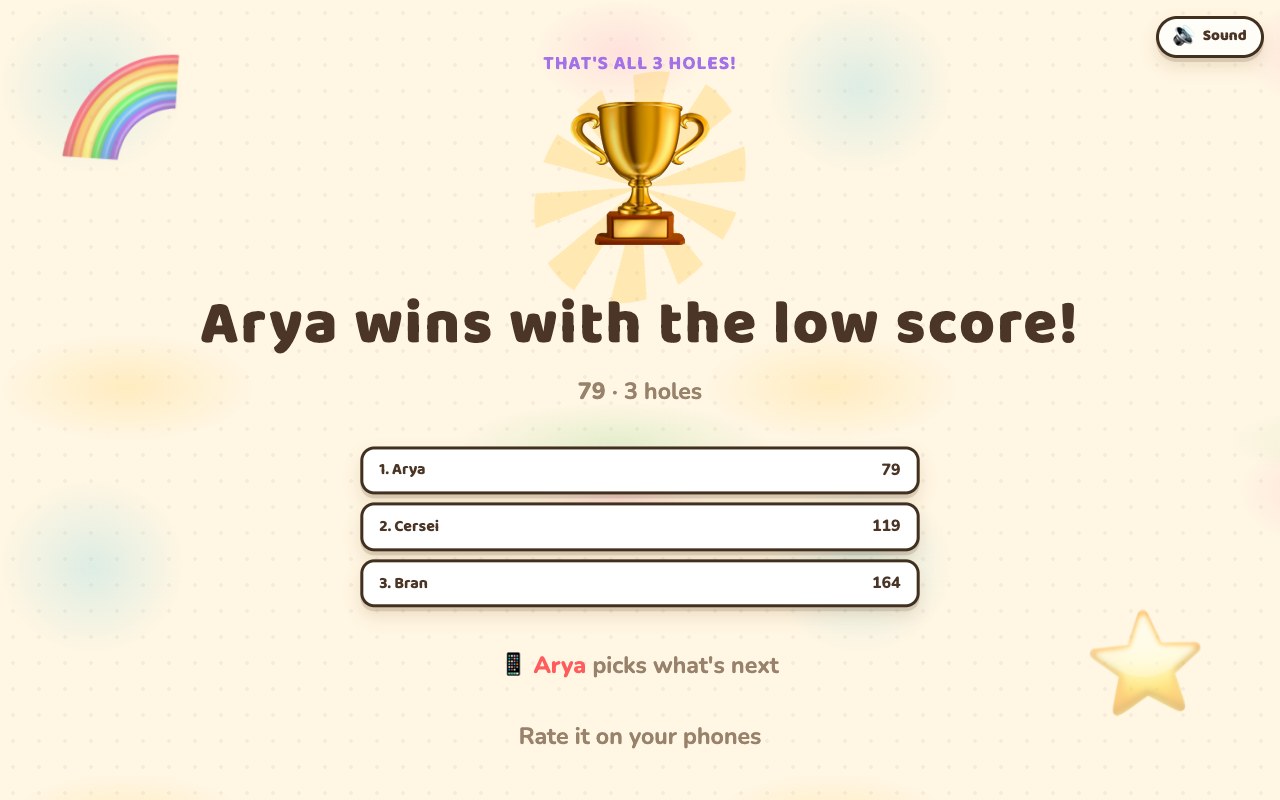
Hole scores add up across the game, and the lowest total wins. There's no bonus for going out and no penalty for coming last in a hole — just the number.
Tips
Playing it well
Chase pairs, not low cards
A 2 in a column with a 6 is worth 8. A pair of 9s is worth nothing. If you're showing a big card, the card you want is the same big card — and there are eight of each in the deck, so it's a real hope rather than a prayer. Once you've matched a column, the third copy of that number is worth chasing hardest of all: a second column of it pays -10.
The discard pile is a conversation
Everything you throw away is offered to the next player. Late in a hole, check what they're showing before you bin a card — handing the leader the second 11 they've been waiting for is worse than keeping it yourself.
Taking from the discard commits you
A card off the pile must go into your grid. Only a card off the deck can be thrown away to reveal one of your own instead. So the deck is the flexible option and the pile is the certain one.
Don't be shy about swapping face-down cards
Dropping a −5 onto an unseen card is nearly always right: the average card in the deck is a five and a half, so an unknown slot is worth about five and a half. Anything below that is an improvement you don't have to think about.
Going out is a weapon, not a goal
It gives everybody else exactly one turn. Go out while the table is holding half-finished grids and you'll take points off all of them — go out on 30 because you were bored and you've simply lost the hole.
Count the turns you have left
Once somebody goes out, you get one more card. Two hidden cards and a bad column can't all be fixed, so decide what that final turn is for before the hole gets there.
Keep your last card hidden if you're losing the hole
The Skip only shows up when one card is left, and it's there for exactly this: you don't have to end the hole just because you can. Stay in, keep swapping, let somebody else run out of grid.
It's a round of golf, not a hole
A single disastrous hole is four or five holes' worth of small mistakes. Over nine holes, the player who never scores 40 beats the one who twice scores 4 — steady is the whole strategy.
In short
The seven things to remember
- Eight cards in a 2×4 grid; you start by looking at 2.
- Take from the deck (keep it or bin it) or the discard (keep it).
- Whatever you swap out goes face up for the next player.
- A matched column is worth 0 — a matched pair of −5s is -10, and one number matched in two columns pays -10 on top.
- First grid fully face up ends the hole after one last turn each.
- Holes add up over the game.
- Lowest total wins.