Eldoria · a party game for the TV
How to play
Wordsmiths
One player doesn't know the word. Everybody else writes one clue for it — and any two clues that turn out to be the same idea are both thrown away. The guesser only ever sees what survived. You're all on the same side.
The whole game in one picture
Good clues cancel each other out
The secret word is VOLCANO. Four people wrote a clue for it without talking to each other, and two of them had the same thought.
Both copies go, not just the second one — so the person who wrote the obvious clue has cost the team as much as the person who copied them. That single rule turns “think of a good clue” into “think of a good clue nobody else will think of”, which is a much harder and much funnier problem.
Setting up
Getting everyone in
Open Wordsmiths on the TV
Pick Wordsmiths from the party-games home screen. The TV shows a four-letter room code and a QR code — that's everything anyone needs.
Everyone joins from their phone
Scan the code or type the address in, put a name in, and you're on the TV. The colour beside your name is yours for the whole game — it's the colour your clue card wears when the round is revealed.
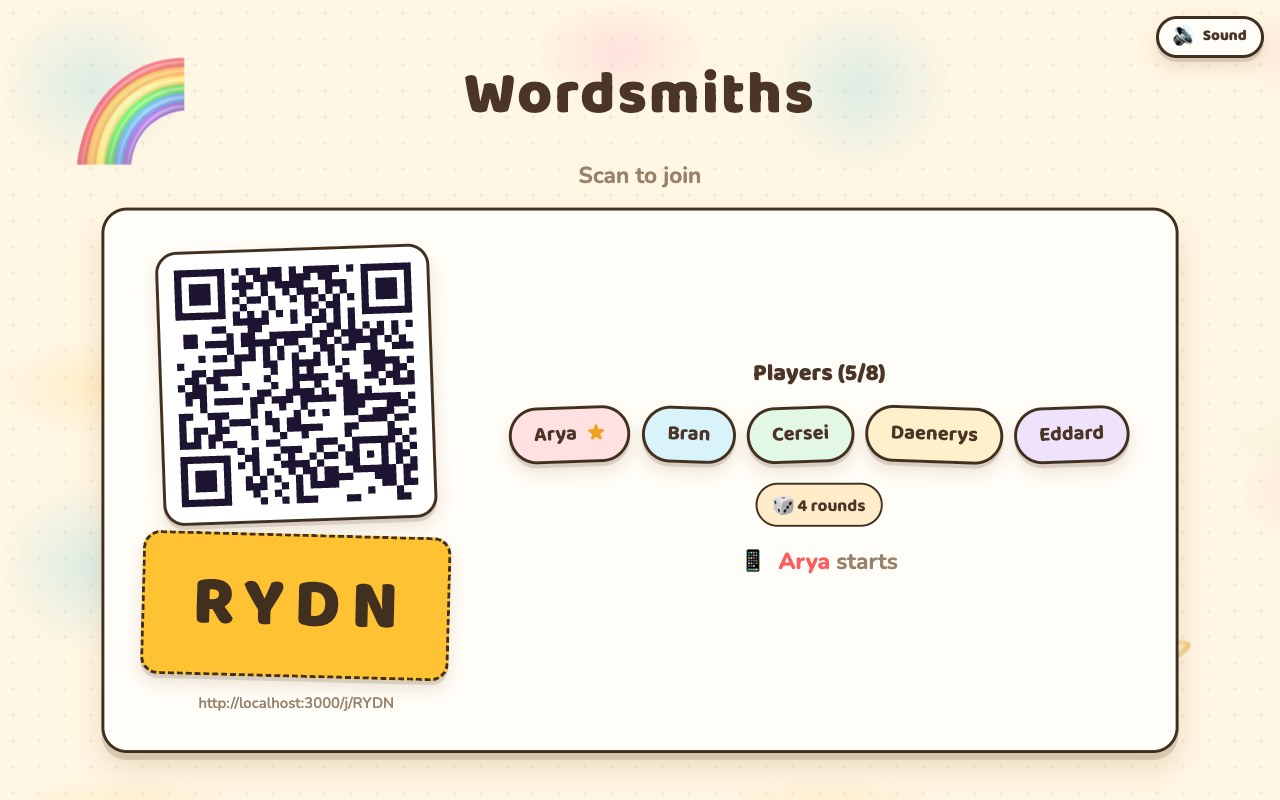
The host picks a length and starts
Whoever joined first is the host, and the host's phone is the only one with buttons on it. They choose 4, 8 or 12 rounds and press start. After that the host only taps to move between rounds.
The guesser's chair goes round the room in a shuffled order, and it keeps going until the round count runs out. So a short game with a big crowd means some people never take the chair — which is why the order is drawn rather than being the order you joined in.
The loop
What happens in a round
Four beats, about a minute each, and everybody's role swaps as the chair moves on.
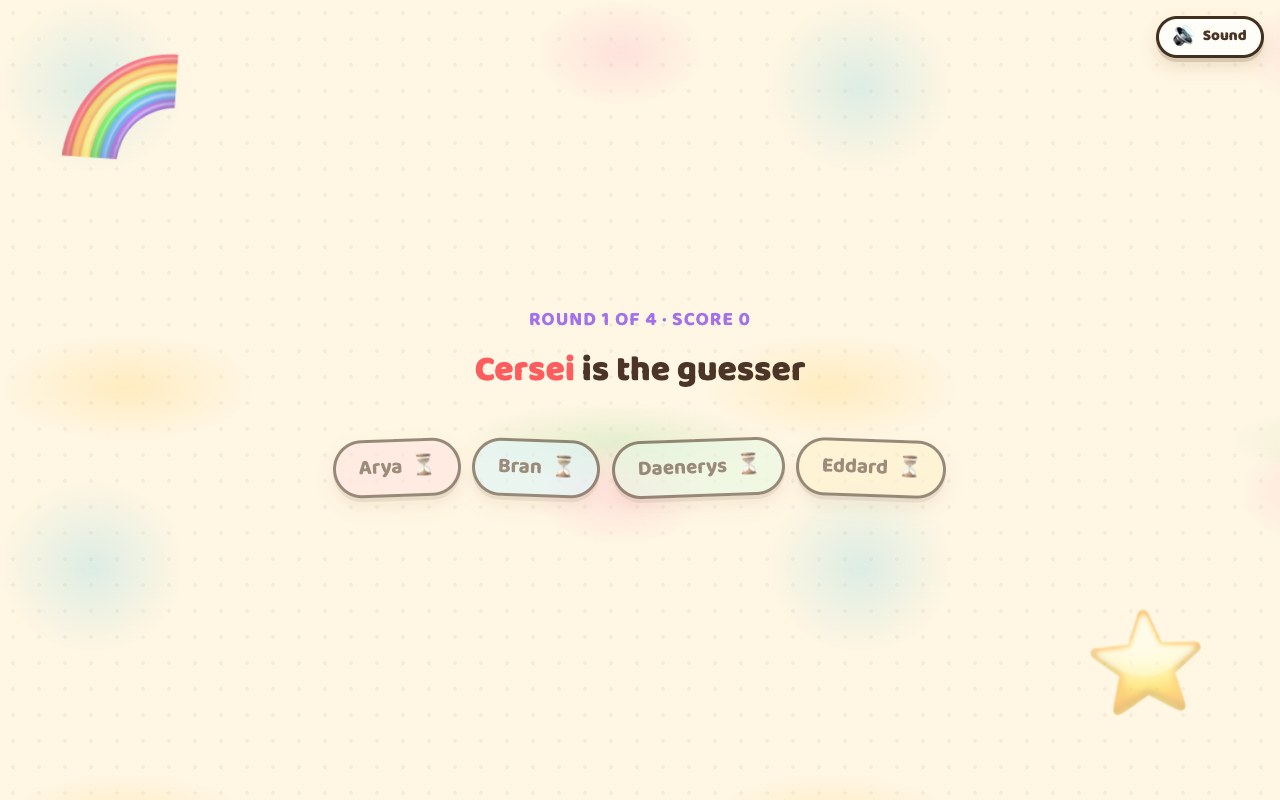
One player becomes the guesser
The TV names them. They're the only person at the table who doesn't get the word — their phone says so, and then asks them to sit on their hands for a minute.
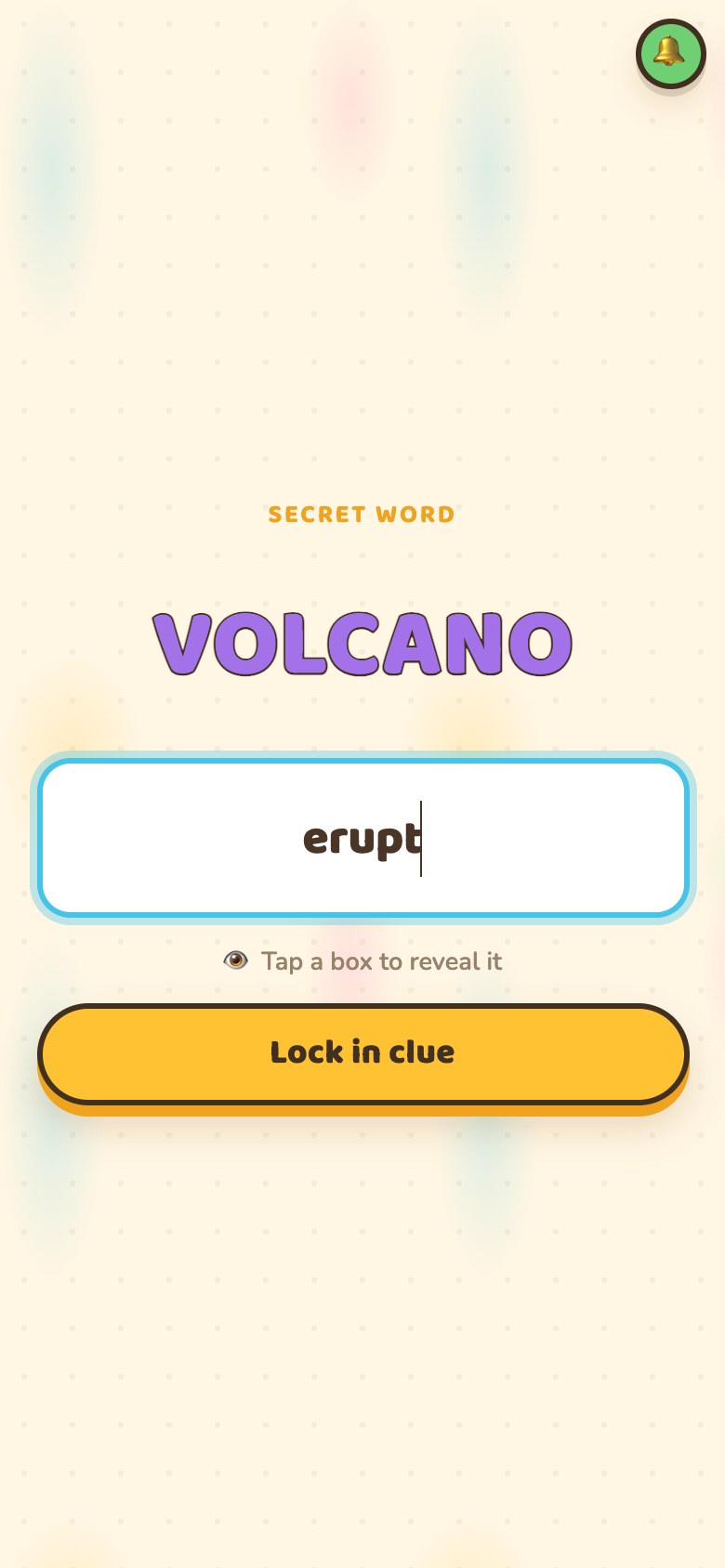
The word sits blurred on the clue-givers' phones until you tap the box — so you can hold your phone up in a room with the guesser in it without giving the game away.
Everyone else writes one word
One word. Hyphens and apostrophes are fine — well-being
and o'clock both pass — but two words don't, and neither does the
secret word itself or anything within a whisker of it. Up to
24 letters.
With 4 players or fewer there are only one or two people writing, so you each write two clues instead — the guesser needs something to work with.
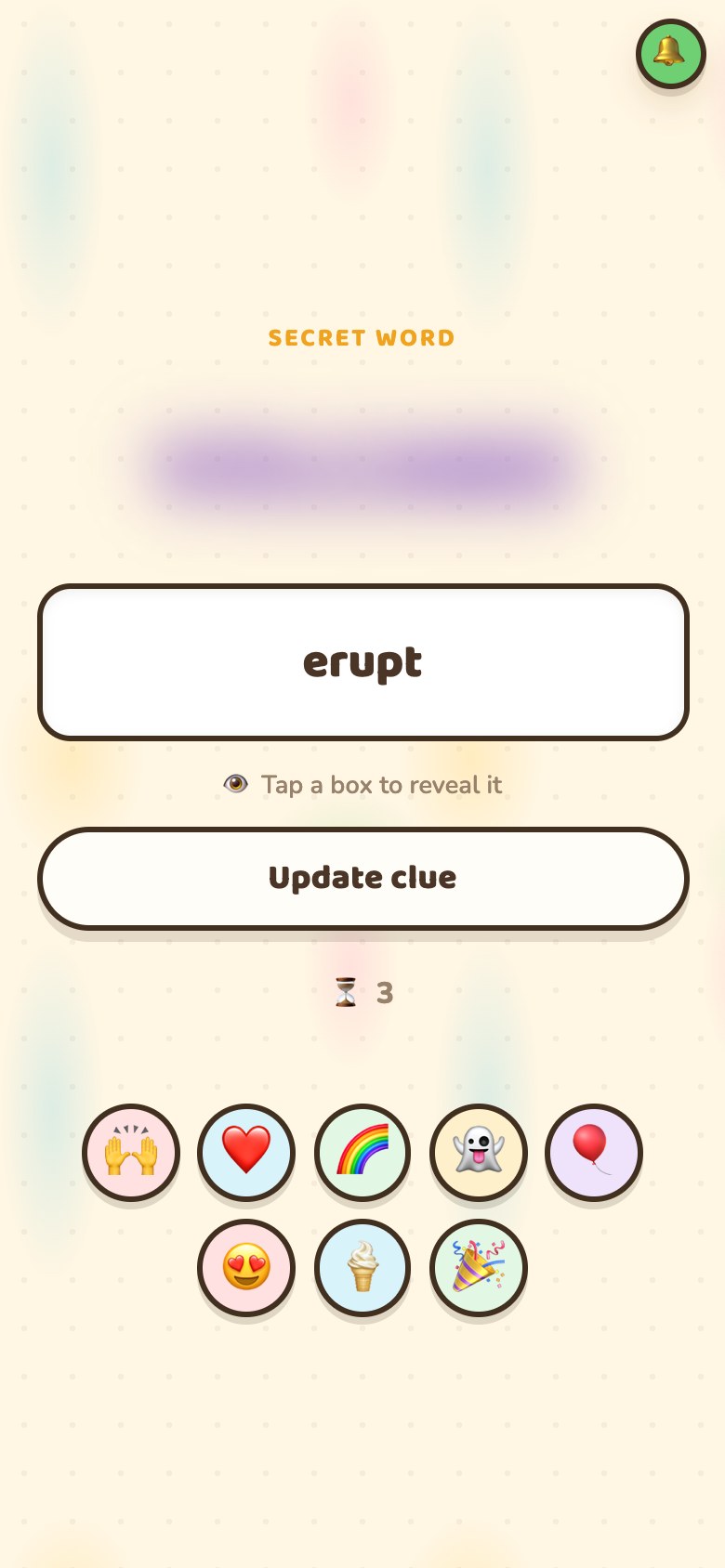
Locking in isn't final: the button turns into Update clue and you can keep rewriting until the last person is in. Nothing is revealed to anybody while you do.
The clashes get struck out
The moment the last clue lands, every clue is compared with every other one and the collisions are struck — all of them, not one of each pair. A clue that gives the secret word away goes too. Whatever's left goes up on the TV, in the writers' colours, with a count of how many were cancelled but not what they were.
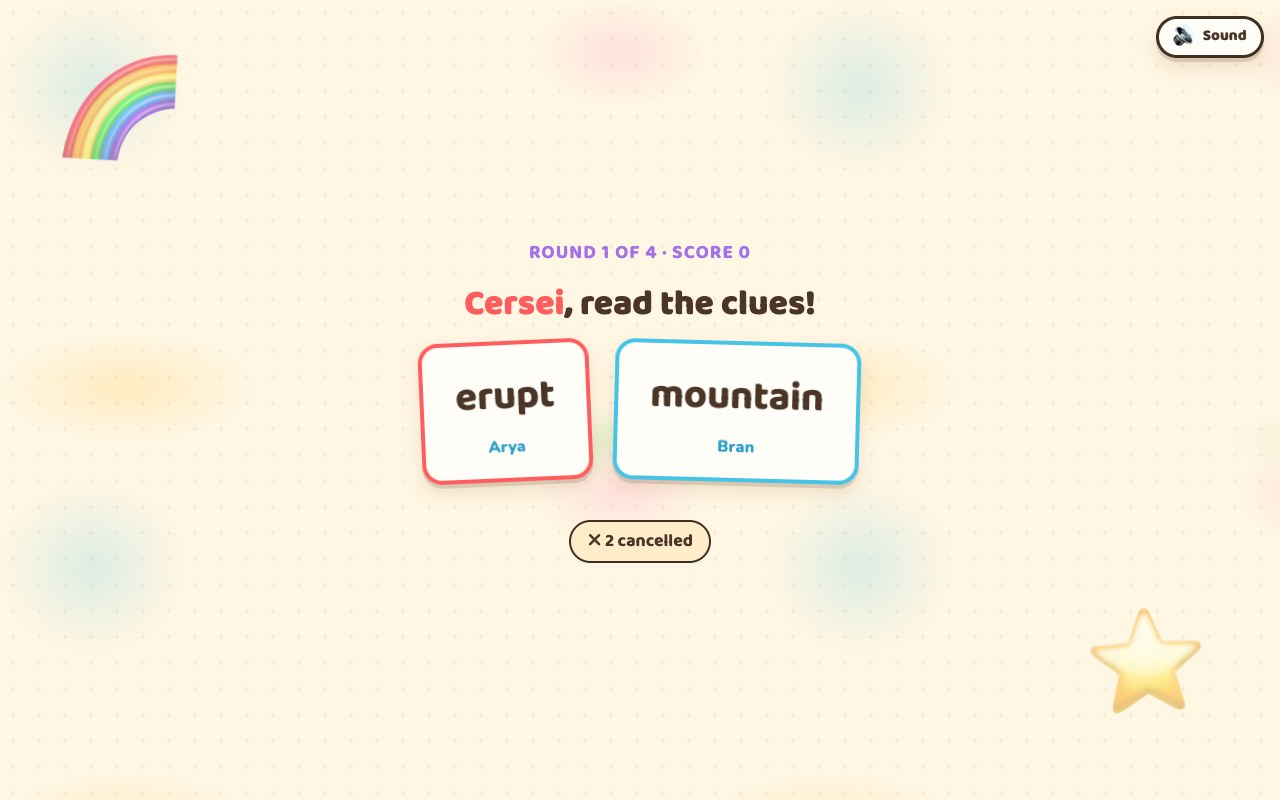
The guesser gets one shot
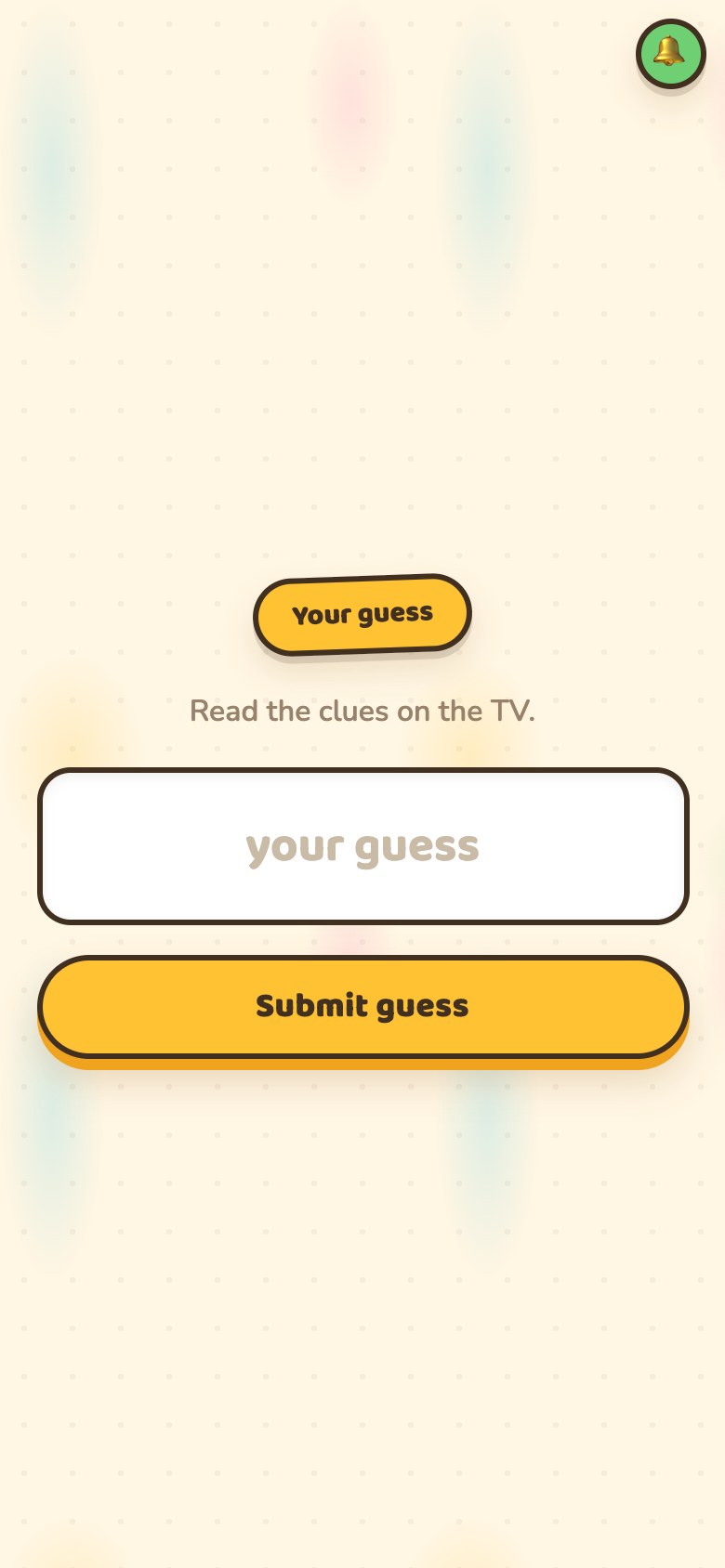
One guess, typed on their phone, and that's the round. Spelling is forgiven — a guess a letter or two out from the word still counts, and so does a plural or a close derivative. The team either scores the round or doesn't.
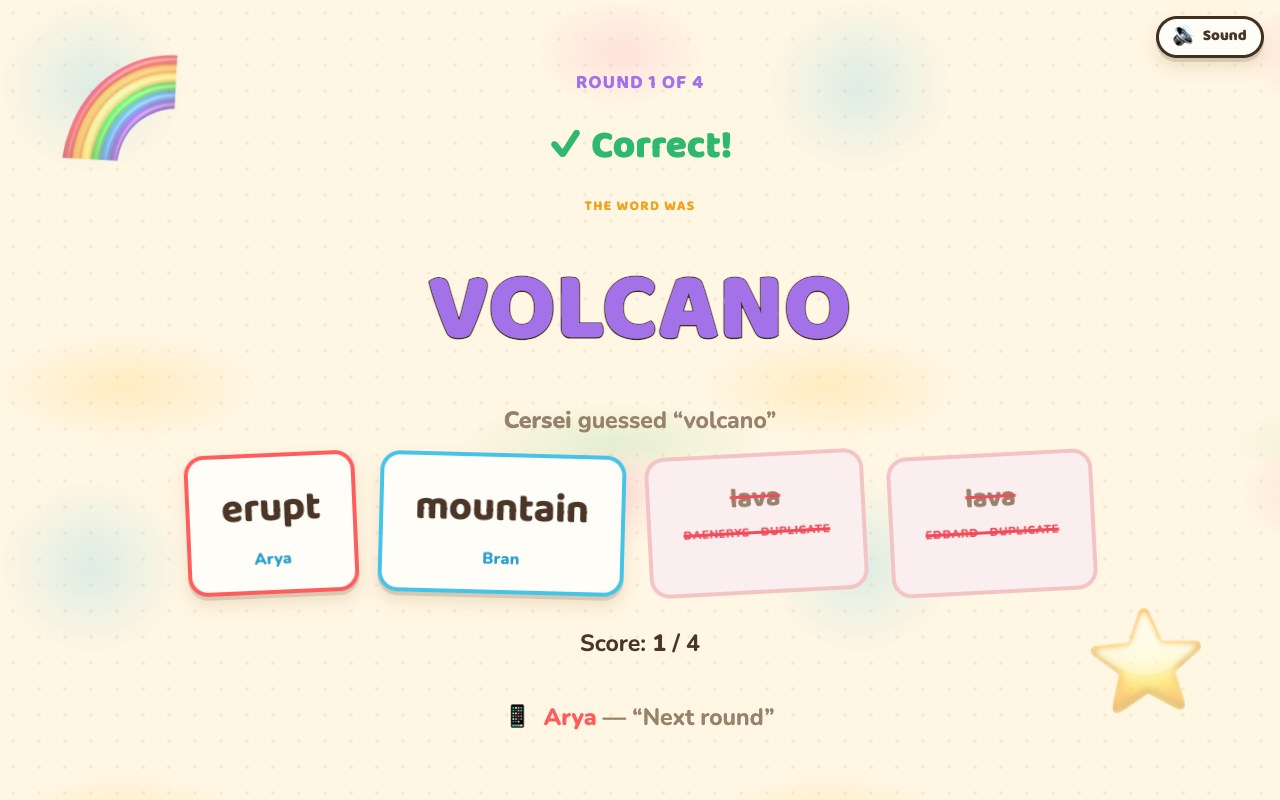
Only now does the table find out what was cancelled — which is the best part of the round, and the reason to write your clue down even if you suspect somebody else has had the same idea.
The rule everything hangs on
What counts as the same clue
It isn't just identical words. Two clues collide when they're the same word inflected or misspelled — so nobody can dodge the rule by bolting an S on the end. What matters is the front of the word: two clues that agree on their opening and differ only near the end are treated as one idea. Words that part company early — rhymes, anagrams — are two different clues and both stand.
| These two clues | Collide? | Why |
|---|---|---|
lava · lava | Yes | The same word. |
castle · castles | Yes | One is the other with an ending on it. |
colour · color | Yes | The same word, spelled two ways. |
trap · traps | Yes | Same stem, and the difference is all in the tail. |
hot · hat | Yes | One letter, near the end of a short word. Close enough. |
rat · tar | No | Same letters, different word — nothing in common at the front. |
moon · noon | No | Rhymes aren't the same idea. Both stand. |
strap · scrap | No | One letter apart, but they part company at the front. |
A clue is also struck if it's too close to the secret word — the word itself, a plural of it, or anything a couple of letters away. There's no penalty beyond losing the clue, so an accident costs the team one card, not the round.
When it all goes wrong
Every clue struck
Sometimes a word is so obvious that everybody writes the same thing and the guesser is handed a blank board. That's a wipeout, and the guesser gets a way out: their phone offers Skip this round alongside the guess box.
A skipped round comes out of the bottom of the score — it isn't a miss, it's a void. The collision was the clue-givers' doing and there was nothing to guess from, so it would be unfair to hang it on the one person who never saw a clue. They can still take a wild swing if they fancy it.
Scoring
One shared score, and a grade
Nobody scores individually. Every round the guesser gets right is one point for the whole table, and at the end the score is put over the rounds that counted — skipped rounds having dropped out — and turned into a letter.
| Grade | You got | Out of 8 |
|---|---|---|
| A | 90% or better | 8 |
| B | 75–89% | 6–7 |
| C | 60–74% | 5 |
| D | 40–59% | 4 |
| F | under 40% | 0–3 |
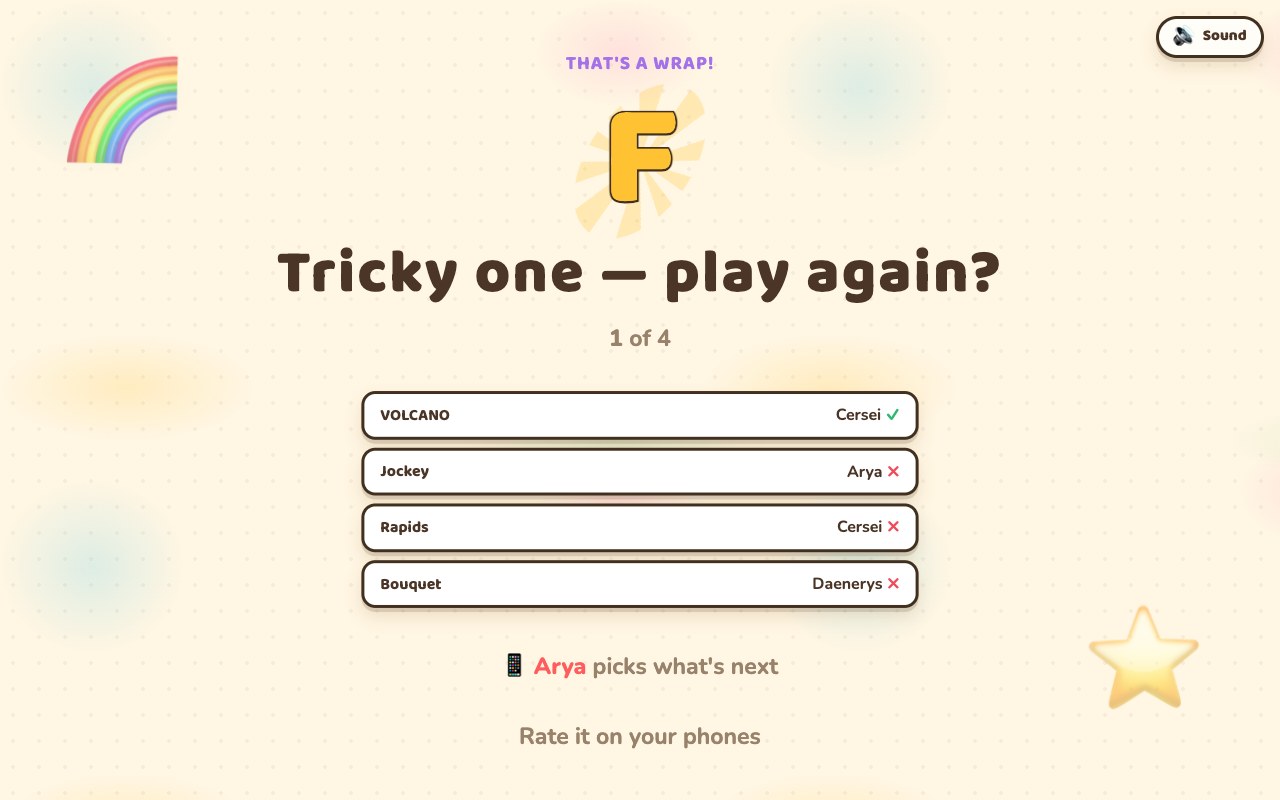
Because the score is shared, there's nothing to be gained by looking clever on your own. A brilliant clue that gets struck is worth exactly as much as no clue at all.
Tips
Playing it well
The first word you think of is the trap
So is the second, if it's a synonym of the first. For VOLCANO, lava is written by half the room. Go one step sideways — Pompeii, Iceland, hot — and you'll survive.
Look at who's writing
You can't talk about the word, but you know the people. If somebody at the table is going to write the obvious clue, let them have it and take the odd angle yourself. Two clue-givers who read each other well are worth more than four who don't.
Plurals don't save you
castles collides with castle, and trapping
with trap. If your only idea is a version of the obvious word,
you're already in the collision — pick a different idea instead
of a different ending.
Weird beats precise
A clue only has to survive and point. A strange, specific, personal association does both — nobody else will write Dad or Tuesday — where a careful, accurate definition is exactly what the person next to you is also writing.
Two clues each is two chances to clash
At a small table you write two, and the pair are compared against everything else on the board — including each other's second clue. Make them different kinds of clue, not two goes at the same one.
Guessers: count the cancellations
The TV tells you how many clues were struck. Three cancellations out of four means the word is something everybody has an obvious association with — which is a real hint about the word from the one clue you can still read.
Spelling is not the enemy
Guesses are matched forgivingly — a letter or two out still counts, and so does a plural. Say the word you mean and don't spend your one shot worrying about the spelling.
Nothing is lost by locking in early
Your clue stays private until every clue is in, and you can rewrite it as many times as you like before then. There's no advantage to holding it back and no information to be had from going last.
In short
The six things to remember
- One player is the guesser and doesn't see the word.
- Everyone else writes one word — two each at a small table.
- Clues that are the same idea are all struck out.
- The guesser reads the survivors and gets one guess.
- Every clue struck? The guesser may skip, and the round doesn't count.
- One score for the whole table, graded A to F.